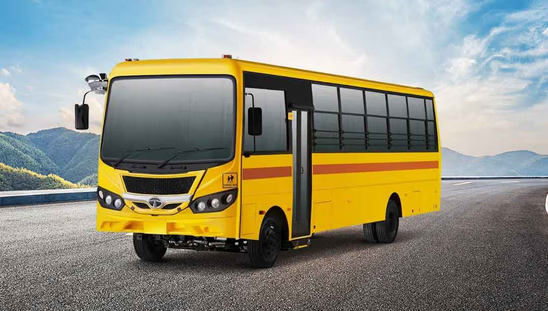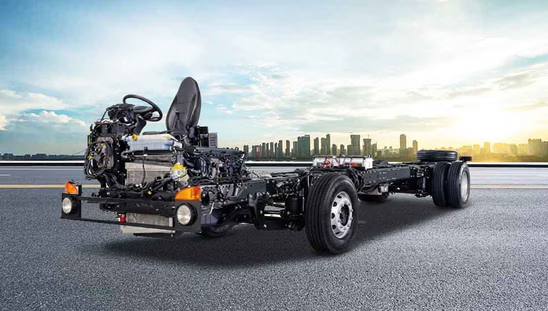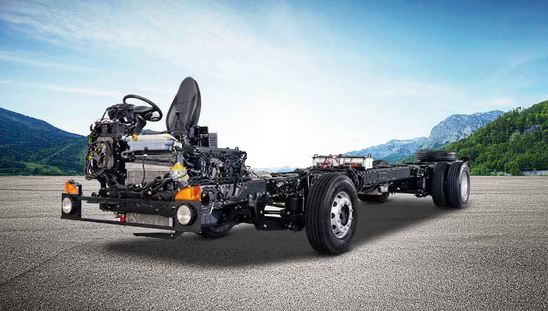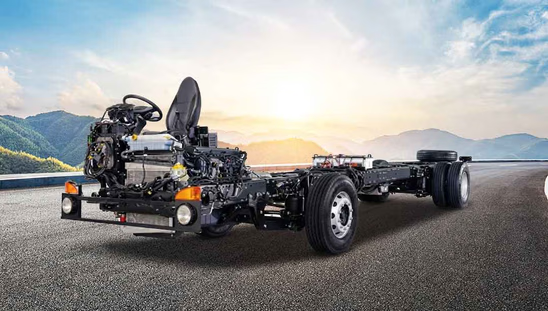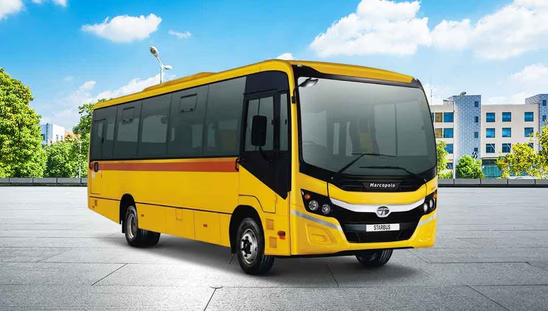
The price of bus in India ranges from ₹ 19.0 lakhs to ₹ 37.03 lakhs (Ex-Showroom*). Tractorkarvan has listed more than 200 models that are suitable for mass mobility, serving as the primary public transport for urban commuting and rural connectivity. Some of the popular bus models include the Tata Starbus, Force Traveller, Ashok Leyland Viking, etc.
| Model | GVW | Indicative Price |
|---|---|---|
| SML EcoMax | ₹15.50 Lakh - ₹18.90 Lakh* | |
| BharatBenz Staff 1017 | 10600 kg | ₹35.81 Lakh - ₹37.03 Lakh* |
| BharatBenz School 1017 | 10600 kg | From ₹37.27 Lakh* |
| SML BH | ₹20.30 Lakh - ₹21.45 Lakh* | |
| SML Staff Hiroi | ₹23.50 Lakh - ₹23.70 Lakh* | |
| SML Staff S7 | From ₹15.50 Lakh* | |
| SML School S7 | From ₹20.93 Lakh* | |
| SML School Executive LX | From ₹25.00 Lakh* | |
| BharatBenz 1017 Shell | 10600 kg | From ₹17.05 Lakh* |
A bus is a large road vehicle made to carry many passengers at once. The earliest forms of buses emerged in the 1820s as horse-drawn carriages. Over the past two centuries, they have evolved into motorised and increasingly sustainable mass‑transit systems. In India, the bus market plays a crucial role in public transportation, with the diesel segment dominating high‑volume operations due to its reliability and suitability for long‑distance and heavy‑load use.
But India is moving towards e-buses with manufacturers such as Tata, to reduce pollution and modernise infrastructure. Additionally, it is transitioning to the electric sector for urban and intercity travel.
Buses are high capacity passenger vehicles used for transportation and include city buses, intercity coaches, minibuses, and school buses. They are widely deployed for public commuting, tourism, and charter operations. The primary role of buses is to offer affordable, sustainable, and efficient mobility while carrying a large number of passengers. By encouraging shared travel, buses also help reduce private vehicle dependency and minimize the need for parking space.
Buses have different types of fuel-operating systems. You can check out the different types of fuel operating engines as mentioned below:
In India, there are different types of buses available, such as intercity coaches, urban transit buses, school buses, and staff transporters.
In India, the most popular bus brands are TATA, Ashok Leyland, Eicher, Mahindra, BharatBenz, SML and Force. These brands are famous for their unique features.
Buses in India are now introduced with new and advanced features. Let’s have a look at these features, which are now available in buses:
Bus price in India ranges from ₹ 19.0 lakhs to ₹ 37.03 lakhs (Ex-Showroom*). However, bus prices may vary depending on state rules, RTO charges, road taxes, registration fees, etc.
TractorKarvan is a digital platform that helps you choose the right bus based on your specific requirements. You can easily filter buses by price, fuel type, seating capacity, and number of tyres to find models that best suit your needs. Moreover, you can compare commercial vehicles on Tractorkarvan with different bus models to make a well-informed decision.
There are 3 types: Diesel, CNG, and Electric. The most dominant fuel in India is diesel.
The price of bus in India is between ₹19.0 lakhs and ₹ 37.03 lakhs (Ex-Showroom*).
The most popular bus brands in India are TATA, Ashok Leyland, Eicher, Mahindra, BharatBenz, SML, and Force.
The difference between AC and non-AC buses lies in comfort and cost. So, it completely depends on your budget and comfort.
It offers ADAS, safety features, spacious Interior, and AI & Data Analytics.