Beetle Management in Plants: The Ultimate Guide


Beetles usually feed on leaves, roots, and fruits of plants. This results in damage to the crop and reduces overall yield. It is important to control beetles to keep the crops healthy and get a good yield. In this blog, we discuss some common methods for managing beetles in plants.
Table of Contents
- What is a Beetle?
- Identifying the Beetle Problem
- How to Manage Beetle Infestation?
- Ways to Prevent a Beetle Infestation
- Conclusion
What is a Beetle?
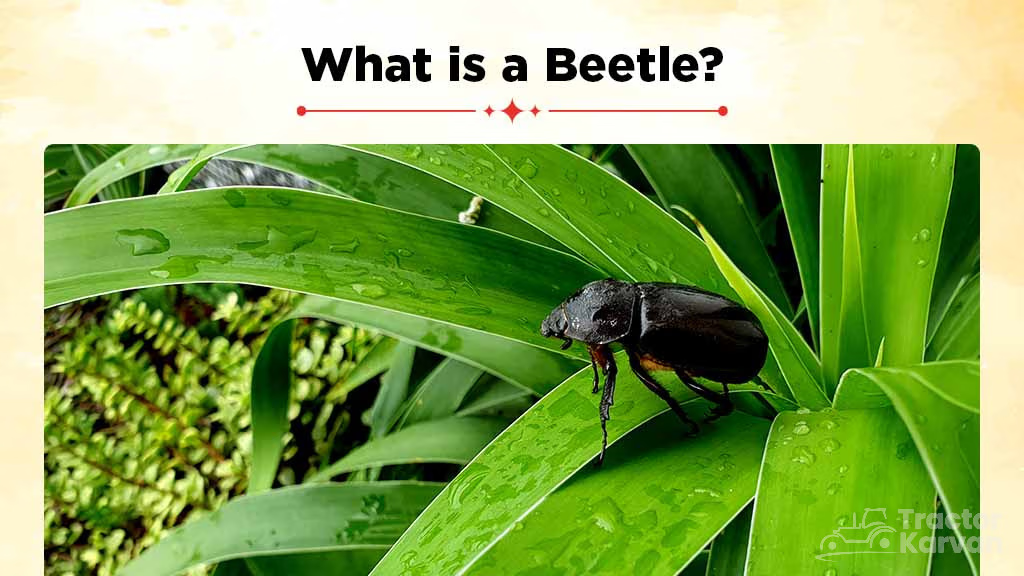
Beetles account for 25% of the known animal life forms. They are a common type of pest insect that belongs to the insect order Coleoptera. It is the largest order, with more than 4,00,000 species, accounting for about 40% of all described insect species. Japanese beetles, Colorado potato beetles, flea beetles, cucumber beetles, weevils, etc., are some of the common types of beetles found in nature.
Identifying the Beetle Problem
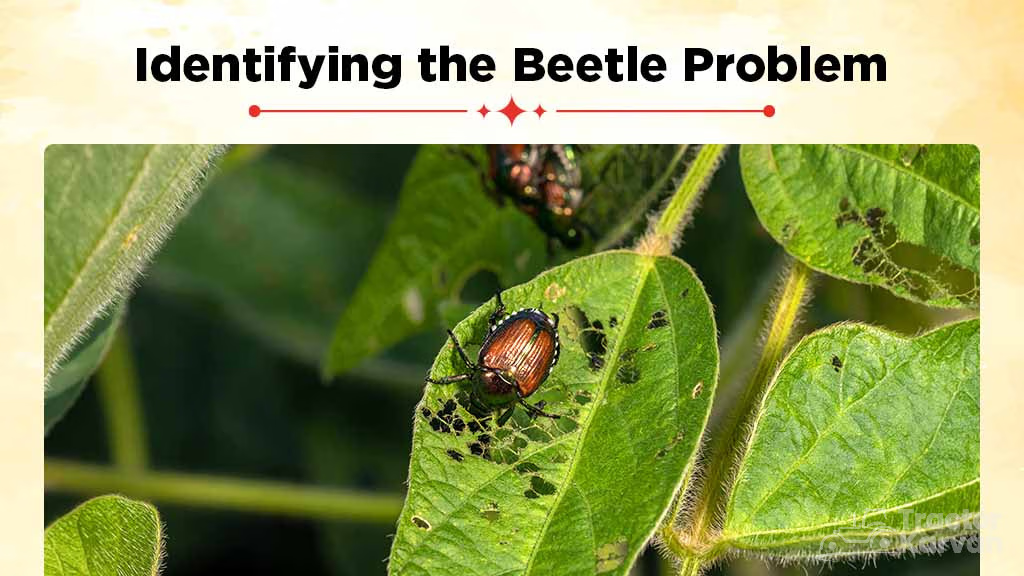
In July 2025, rubber plantation in Kerala faced a risk from beetles and fungi combination. Beetles can be easily managed through early detection as different beetle species have their own feeding patterns, life cycles, and weaknesses. Below we have discussed ways of identifying some beetles:
- Japanese beetles skeletonize leaves and leave behind a lace-like structure of veins.
- Flea beetles make small and round shot holes in foliage, particularly in seedlings.
- Cucumber beetles chew irregular holes in leaves and can also transfer bacterial wilt disease.
- Weevils often target roots and stems and cause wilting.
Regular inspection of the plants can help spot an infestation before it gets out of control. You can simply do this by checking the undersides of leaves, stem bases, and soil around plant roots. Adult beetles are often more visible during early morning or evening hours when temperatures are cooler.
How to Manage Beetle Infestation?
Below are the main methods to consider if you want to manage beetle populations in your plants:
Biological Controls
Natural predators are one of the easiest ways to manage beetles. Birds like ducks and hens that feed near the ground eat large numbers of beetle larvae and adults. So, putting up birdhouses or bird feeders near your farm or garden can help in beetle management.
Parasitic wasps, predatory beetles like ground beetles and ladybugs can also prove to be useful as they actively target beetle larvae in soil. The larval stage of beetles (grubs) can easily be controlled by applying beneficial nematodes as a soil drench.
A bacterium named Milky spores specifically targets Japanese beetle grubs. Once applied to soil, it can control the beetle population for years. Milky Spores are entirely harmless to humans, pets, earthworms, etc.
Physical and Mechanical Methods
Hand picking beetles is still the most effective method for small gardens and high value plants. Beetles can be easily collected during the morning because the cool temperatures make them slow and picking them is easy. The collected beetles can just be dropped into soapy water to ensure they won't return.
Apart from physical methods, you can use lightweight fabric to avoid beetles from reaching seedlings. But it is important to remove the fabric during flowering to allow pollination.
Sticky traps and pheromone traps can also help control beetle populations. Although pheromone traps should be placed away from target plants because they can attract more beetles to the area.
Chemical Control: A Last Resort
In case of severe infestation, the use of chemicals becomes necessary in beetle management. The use of insecticidal soaps and neem oil can disrupt beetle feeding and reproduction cycles, while being relatively safe for beneficial insects. You can apply these chemicals during early morning or evening to avoid harming pollinators like bees, which are most active during midday.
Synthetic insecticides (pyrethroids) can be used for more severe infestations, but they should be used as a last resort. The overuse of these pyrethroids can lead to resistance, and it can also harm the beneficial insect populations, and disrupt the garden ecosystem.
|
Crop |
Beetle Name |
Insecticide |
|
Grapes |
Flea Beetle |
Lambda Cyhalothrin 5 CS, Imidacloprid 17.8 SL, Fipronil 80 WG, etc. |
|
Coconut |
Rhinoceros Beetle |
Chlorpyriophos |
|
Bootle Gourd |
Red Pumpkin Beetle |
Fipronil+Spinosad |
|
Brinjal |
Hadda/Spotted beetle |
Azadirachtin 0.03 (300 PPM) |
Integrated Pest Management
The most effective beetle management strategy combines multiple approaches rather than relying on any single method. Integrated Pest Management (IPM) focuses on monitoring, prevention, and using the least toxic method first. This approach not only protects plants but also protects the beneficial insects, pollinators, and soil organisms that help make the garden ecosystem.
Ways to Prevent a Beetle Infestation
Prevention is always more effective than cure. Healthy, well-nourished plants are naturally more resistant to pest damage, so maintaining proper soil fertility, watering schedules, and spacing is important. Overcrowded plants increase humidity, and many beetles start flourishing in such favorable conditions. Also, stressed plants release chemical signals that can attract pests.
Crop rotation disrupts beetle life cycles, and it can be particularly seen in species like the Colorado potato beetle that overwinter in soil near host plants. Rotating susceptible crops to different garden locations each season reduces the likelihood that emerging adult beetles will find their preferred food source nearby.
Removing garden debris, fallen leaves, etc., at season end reduces overwintering sites for many beetle species. Similarly, tilling soil in fall exposes larvae and pupae to predators and cold temperatures. This helps reduce beetle populations before spring.
Some companion plants like marigolds, nasturtiums, and garlic can also help as they are known to repel certain beetle species. Also, trap crops like radishes can lure cucumber beetles away from more valuable plants.
Conclusion
Understanding beetle biology, using preventive practices, encouraging natural predators, and, when necessary, applying chemical controls can help manage beetle populations. These practices also help maintain healthy and productive plants season after season.
Frequently Asked Questions On Beetle Management in Plants
1. How to control beetles in plants?
Control beetles by handpicking them, using chemical control, or by applying organic treatments like neem oil, etc.
2. What is the best pesticide for beetles?
The best insecticide depends on whether you are treating an outdoor garden or an indoor space. Some common chemical pesticides for beetle management are Imidacloprid, Chlorpyrifos, and Thiamethoxam.
3. What is a beetle's favorite food?
Beetle diets vary drastically by species. Herbivores love fresh fruits, vegetables, and leaves. Predators hunt smaller insects, and scavengers consume decaying matter.
4. What animal eat beetles?
The primary predators of beetles include insectivorous birds like sparrows, woodpeckers, etc. Other animals include: frogs, toads, lizards, and spiders.






Related Blogs