Do you know that the first ever public mobile phone call happened 50 years ago? Yes, and ever since then, mobile phones have changed our lives in so many ways. As humans, we like to have the entire world at our fingertips without wasting much time. With this evolution of cell phones, technological innovation marked a big boost in communication, productivity, entertainment, and global connectivity in mankind.
Table of Content
- Introduction
- Early Beginning (1980s – 1990s)
- Feature Phone Era (1990s – 2000s)
- Introduction of Smartphones (Late 2000s – 2010)
- The Modern Smartphone Era (2010 – 2025)
- The Future of Smartphones
- Conclusion
Introduction
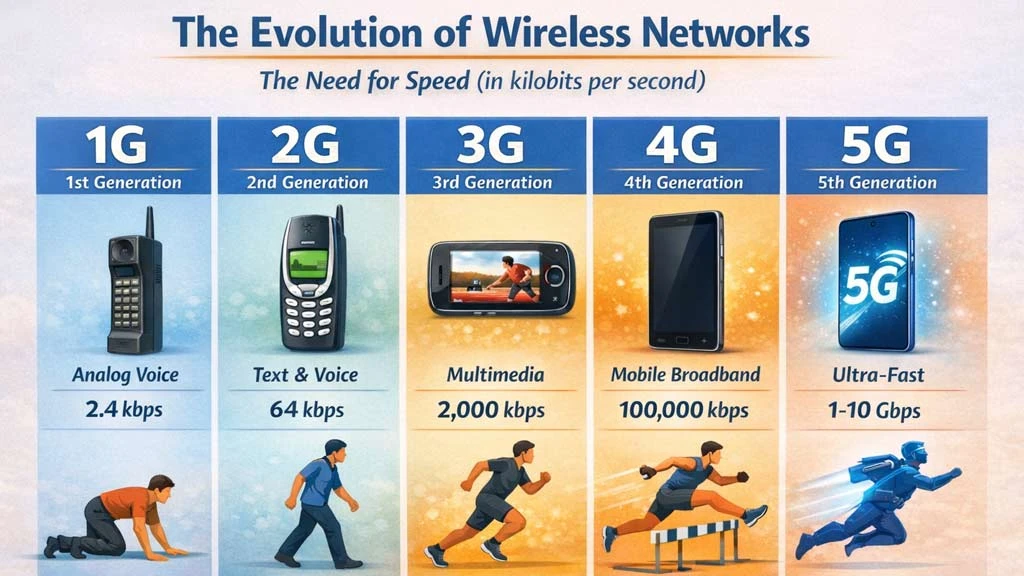
Starting from 1973, cell phones have changed significantly from a simple communication device to a smart primary asset. It is true to say that mobile phones have basically become an essential part of our daily lives. The early mobile phones launched then were large, heavy and mainly used for voice communication. The cell phones were expensive, with limited battery life, and mainly served business professionals. The initial devices were only used for voice calls that were made over analogue networks, which made them a practical choice for the masses.
As second-generation (2G) networks were introduced in the 1990s, the transmission of digital communication started happening, with short messages (SMS). This is where people experienced the first shift, with the use of mobile phones, making faster, efficient, and portable communication. But the question here is, how did they get this advanced? Let’s go through the timeline to see how evolution of mobile phones happens.
Early Beginning (1980s – 1990s)
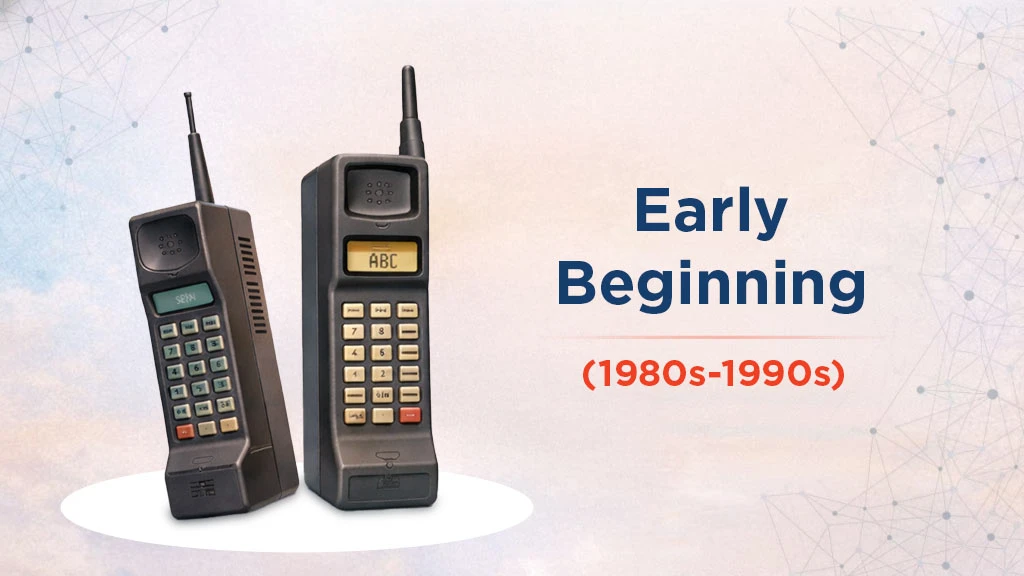
By 1983, the world got its first ever portable mobile phone that was portable in the shape of the Motorola DynaTAC 8000X, which cost a hefty amount of 4000 USD in that era of 1G. This period built the concept of personal mobile communication, transforming from large, car-based phones to easily portable ones, setting the stage for more powerful phones to follow in the 90s. The first generation of mobile phones was dearly referred to as the ‘bricks’ due to their large size compared to the models of today. The phones in that era were used as basic organizers, weighing 2 pounds, and had a limited battery life of 30 minutes.
In 1989, Motorola developed DynaTAC with the 9800X or MicroTAC, with something more innovative, like a fold-down keyboard cover that set their standards in the flip phone era throughout the 90s period.
Key highlights are:
- Very Large in size (1-2 kg in weight)
- Available for only voice calling
- Less battery life span
Feature Phone Era (1990s – 2000s)
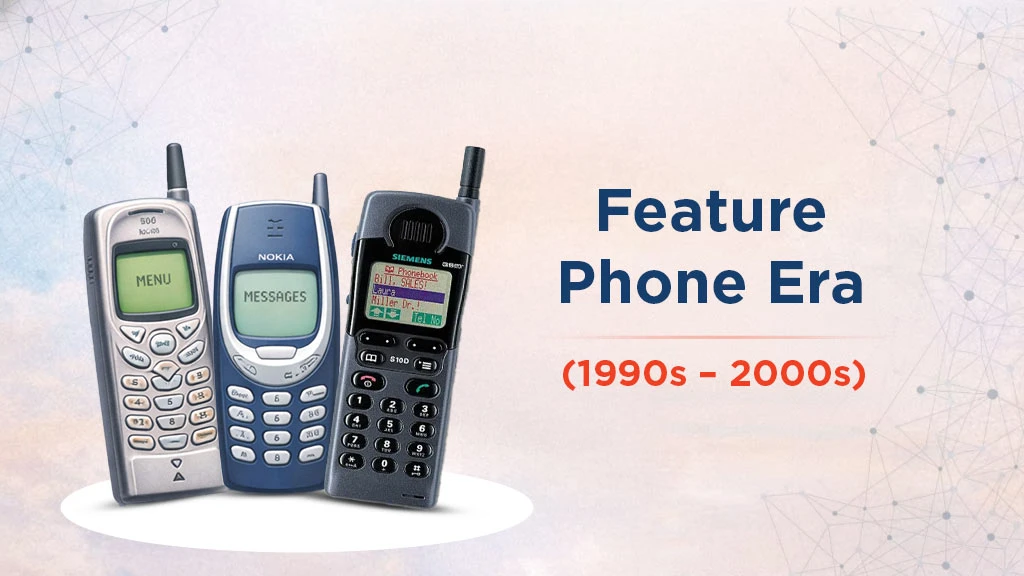
The time of 1990s-2000s was the period of transformation, from heavy ‘brick’ like phones to something more advanced, compact and ahead of basic calls and texts. Primarily, the 2G digital network was established, which opened up for better quality of calls and security than the previous 1G networks. Voice calls and SMS were very popular during that time. As per records, Neil Papworth sent the first text message in the world ‘Merry Christmas’ on December 3rd, 1992.
Around 1997 and 1998, the mobile phone evolution shifted from basic tools to stylish gadgets, get created major developments. Siemens S10 was the first to introduce the first ever colour screen, with 4 different display colours. Also, by then, Hagenuk GlobalHandy was the first to hide the antenna inside the device, rather than having that extended stick poking out. Eventually, after that, some established companies created various other mobile evolutions having colourful covers, which made the mobile swap into a personalized, fashionable accessory.
Key highlights are:
- Introduction of GSM (Global System for Mobile)
- Smaller, lighter phones
- Longer battery life, and improved call quality
- Colour displays
- Improved voice call quality
Introduction of Smartphones (Late 2000s – 2010)
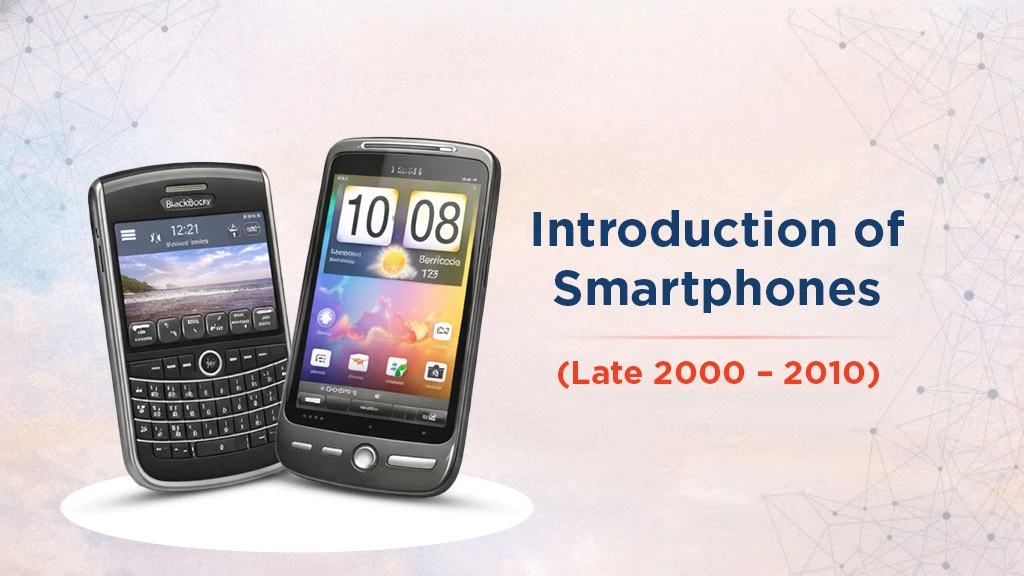
The coming of smartphones in the 2000s changed the entire landscape of mobiles significantly. Suddenly, the world boomed with the ability to connect instantly, breaking every geographical boundary. These mobile phones played an important role in being the bridge between digital divides.
The introduction of 3G took the download speed up to 2 mbps in 2003. The arrival of front-facing cameras on these devices made video calls and real-time communications simple across continents, nurturing the social, personal and business relationship growth.
Key highlights are:
- Adaptation of 3G, for faster data speeds, rich web browsing experience, video streaming, and rise of social media like (Facebook/Twitter).
- Smart phones replaced point-and -shoot cameras, with high-quality sensors and portable GPS units.
- Introduction to email, basic browsing
- Polyphonic ringtones
- Built in basic games like snake, tetris, etc.
- Launch of WAP for browsing web
- iOS and Android, have effectively made its place, in introducing features like Facetime, video calling and welcoming the modern ‘selfie’ culture.
The Modern Smartphone Era (2010 – 2025)
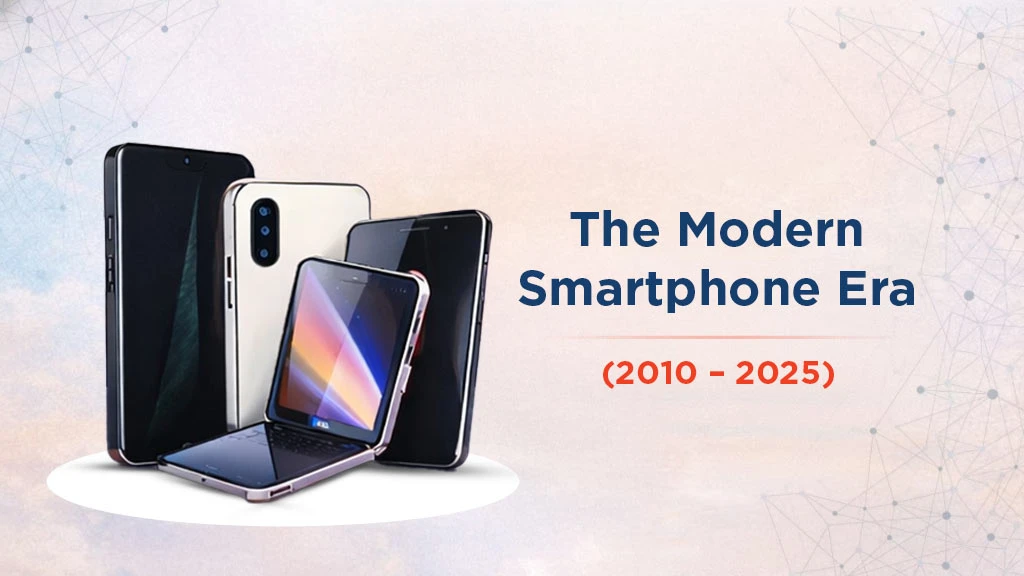
The era known by the dominance of two major operating systems (iOS and Android) marked these 15 years which smartphones transformed from a luxury to nearly a daily aspect of human life. The time when the traditional buttons were replaced with scrolling and swiping, and phones acted as the medium of a major communication hub. The phone speed moved up from 3G to 4G, with the download speed to 100 mbps, with the installation of Google voice recognition in Android and Siri for Apple.
The adaptation of 4G and 5G improved the video streaming and video calling quality, with screen displays bigger than 57% since 2007. These modern evolutions of mobile phones to date offer faster memory functioning, multiple use of applications at the same time, cameras with HD 4K capturing power, video streaming made easy and battery capacity that lasts for online gaming.
Key highlights are:
- High-resolution cameras (front and back)
- Larger Displays
- Biometric security (face locks, fingerprint scanner)
- Mobile payment methods
- High-MP cameras with AI image processing
- Flexible and foldable displays
- Implementation of Ai assistants and cloud storage services
The Future of Smartphones
Going forward, the evolution of mobile phones will continue, with the entry of 6G over the horizon and the exploration of technology that is wearable technology. The next generation of mobile phones will hold modular designs, foldable phones, and bigger reality glasses, for better mobile evolution.
In 2026, smartphones are considered smart personal helpers that can think and function by themselves. All thankful for the futuristic Artificial Intelligence (AI), which will be able to predict your needs, by scheduling your daily tasks, organizing your thoughts and editing your pictures without any hassle on your end.
Key highlights are:
- Smart phones with predictive features, personalised interactions with the power of AI.
- AR glasses and wearables will probably replace the traditional phones.
- Global coverage with satellite connectivity.
- Modular designs with Eco-friendly resources for sustainability.
Conclusion
This mobile phone, which initially started as a simple device for normal telephonic conversation, has evolved into a daily life tool that defines the norms of modern livelihood. Helping with instant communication to reform industries and global connectivity, the impact is unquestionable. As the advancement of technology happens, the role of mobile phones will create an inseparable bond with personal and professional lives, assuring a future where people stay more connected, informed, and empowered than ever before.
Frequently Asked Questions On The Evolution of Mobile Phones Over the Years
1. How have mobile phones evolved over the years?
The evolution of mobile phones have been drastic over the years, starting from the 1G “brick phones” in the 1980’s to the pocket friendly supercomputers 5G with high-tech features, transforming lives with AI powered personal assistants.
2. What is the evolution of 1G,2G,3G,4G and 5G?
The mobile evolution from 1G to 5G signifies a great shift from the analog voice to digital, later to mobile internet, and finally to ultra- fast performance. With each generation showing its major leap of data speed connectivity in humankind.
3. What is the history of mobile phone or cellphone?
The history of mobile phones starts from the bulky car phones introduced to the world by Martin Cooper in 1973, followed by the first commercial release in 1984, and later in 1992 the introduction of early features like SMS and games by 1992-1994.
4. How many types of mobile phones are there?
Mainly there are three main types of mobile phones, starting from Basic phones for calling or SMS, Feature phones with basic internet and camera and Smartphones with advanced features, internet and applications.
5. Is a 6G phone available?
No, there is no availability of 6G phones commercially available in the market, however the technology in still in the process of development, research.






Related Blogs