Milk production plays a vital role in India’s agricultural and dairy economy. Since the launch of Operation Flood, India has transformed from a milk-deficient nation during the 1950s and 1960s to a self-sufficient milk producer. Moreover, as we know, India is the world's largest milk consumer. In this blog, we explore the top 10 milk-producing states in India in detail.
Table of Contents
Introduction
Dairy farming in India is a major practice in animal husbandry. Today, India ranks first in milk production and accounts for around 25% of global milk production. The total milk production in India stood at 247.87 million tonnes in 2024-25. Uttar Pradesh is noted as the largest milk-producing state in India. The milk production from exotic/crossbred cattle has increased by 4.97%. Also, milk production from indigenous/nondescript cattle has increased by 3.51%, and milk production from buffaloes increased by 2.45% compared to the previous year.
Top 10 Milk Producing States in India
According to APEDA (2024–25), the top milk-producing states in India are:
|
India's Milk Production |
||
|
Product: 2024-25 |
||
|
Quantity in: (000) tonnes |
||
|
State |
Production |
Percent share |
|
Uttar Pradesh |
38,815.34 |
15.66 |
|
Rajasthan |
36,741.37 |
14.82 |
|
Madhya Pradesh |
22,595.53 |
9.12 |
|
Gujarat |
19,293.64 |
7.78 |
|
Maharashtra |
16,625.59 |
6.71 |
|
Punjab |
14,874.74 |
6 |
|
Andhra Pradesh |
13,946.13 |
5.63 |
|
Karnataka |
13,897.53 |
5.61 |
|
Bihar |
13,397.69 |
5.41 |
|
Haryana |
12,592.75 |
5.08 |
Uttar Pradesh
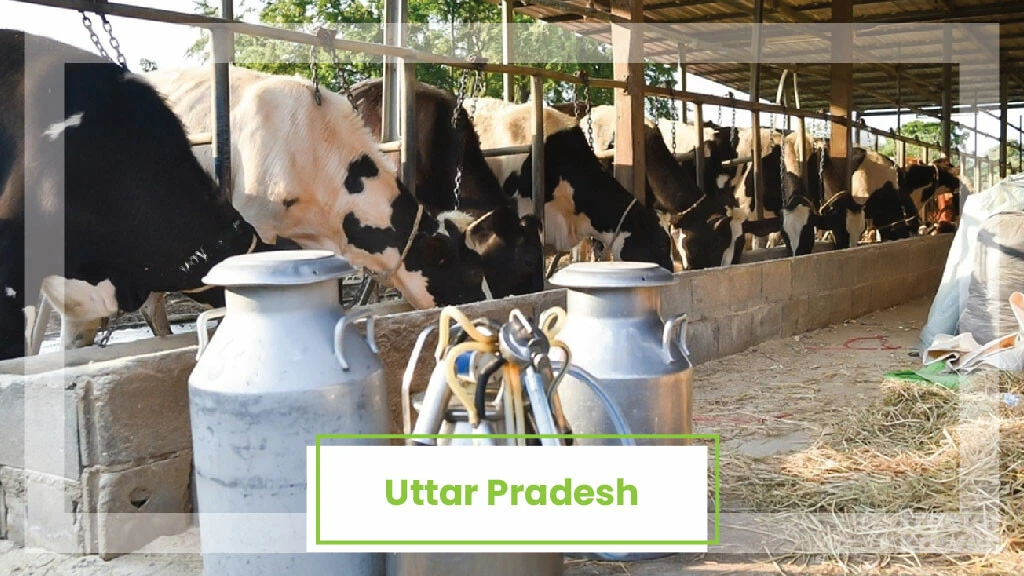
Uttar Pradesh is the highest milk-producing state in India with 38,815.34 thousand tonnes of milk production, accounting for a 15.66% share of total milk production. In 2025, the cattle and buffalo populations were 1,90,19,641 and 3,30,16,785, respectively. Buffaloes are the primary milk-producing animals in the state due to their large breeding population. UP Milk Development and Milk Production Promotion Policy 2022 was introduced to create more jobs and attract greater investment in the dairy sector.
Rajasthan
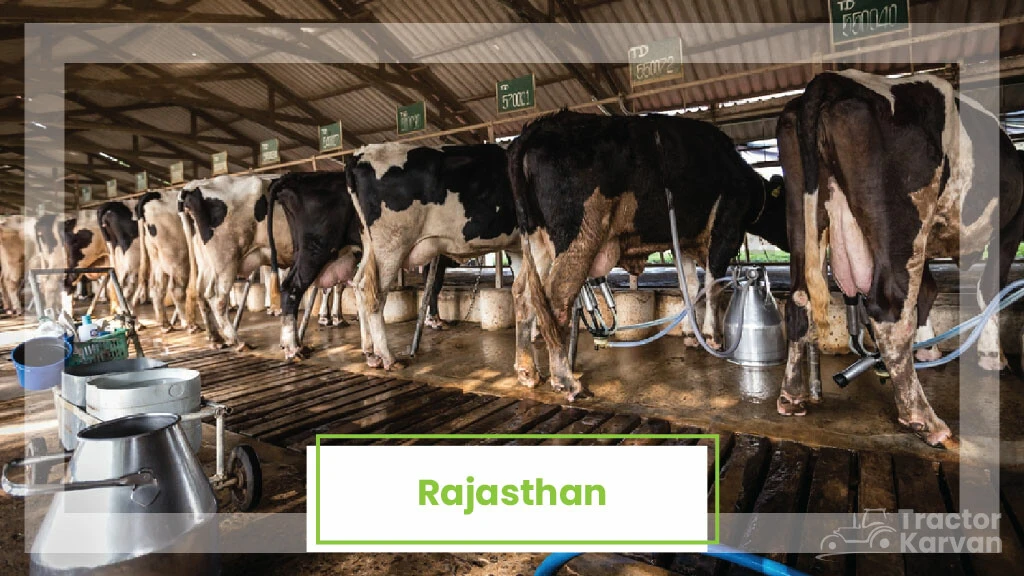
Rajasthan ranks second among the top milk-producing states in India and has a 14.82% share of India's total milk production. The total population of cattle and buffalo in Rajasthan is 1,39,37,630 and 1,36,93,316, respectively. The total milk production in Rajasthan is 36,741.37 thousand tonnes.
Rajasthan Cooperative Dairy Federation (RCDF) has significantly contributed to making milk and its products in Rajasthan famous across India. In 2019, Mukhyamantri Dugdh Utpadak Sambal Yojana was started in the state to increase milk production and improve the financial condition of cattle rearers.
Madhya Pradesh
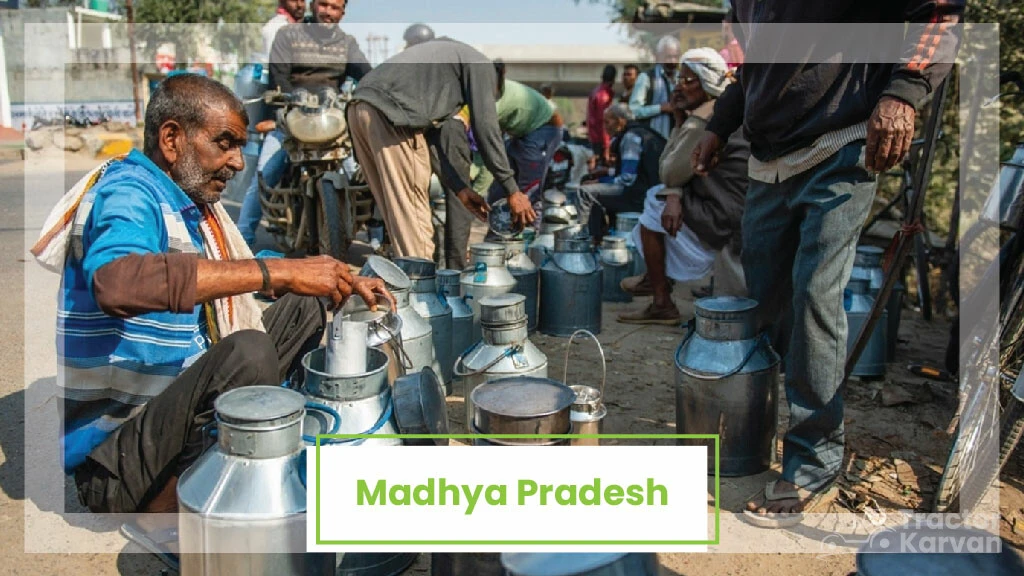
Milk production in Madhya Pradesh is primarily driven by its strong animal husbandry sector. The state accounts for 9.12% of India's milk production. The total cattle population in the state is 1,87,50,828, while the buffalo population is 1,03,07,131. Also, the total milk production of Madhya Pradesh is 22,595.53 thousand tonnes.
MP State Cooperative Dairy Federation safeguards the interests of milk-producing farmers and provides high-quality milk and products at reasonable prices. Also, the state government has decided to offer an incentive of ₹5 per litre of milk produced by farmers. This initiative has been approved with a yearly budget of ₹200 crore.
Gujarat
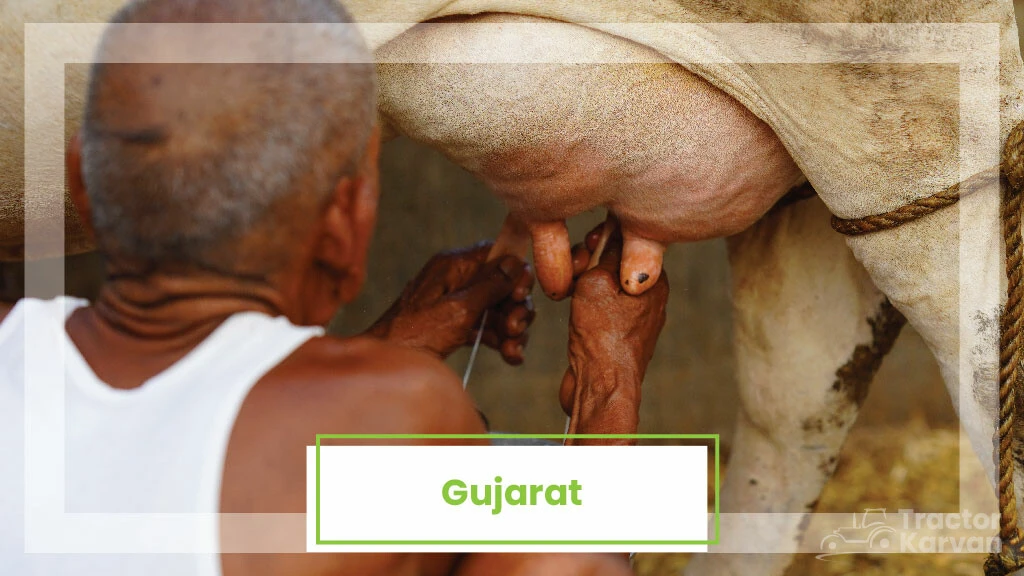
Gujarat accounts for 7.78% of milk production in India. The total milk production by this state is 19,293.64 thousand tonnes. Amul is a famous cooperative society from Gujarat, renowned worldwide for its milk and related products. The state has 126 Collection Centres, 19,288 Milk Producers Cooperative Societies and 19 Dairy Processing Units functional at the district level. The total number of cattle and buffalo in Gujarat is 96,33,637 and 1,05,43,250, respectively.
Maharashtra
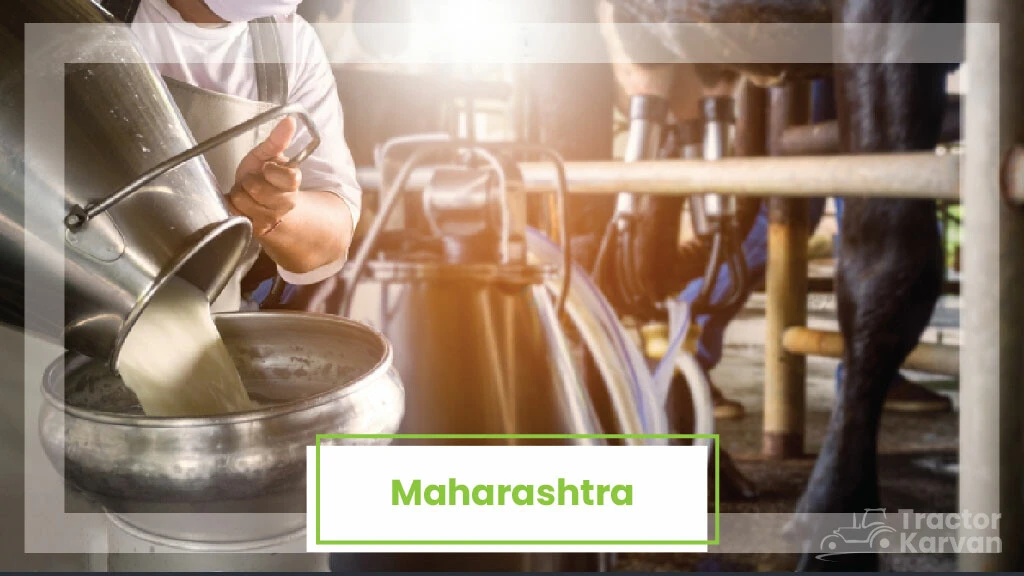
Maharashtra ranks fifth in the list with a total milk production share of 6.71%. The leading milk-producing districts are Ahilyanagar, Pune, Solapur, Kolhapur, and Sangli. The total milk production of Maharashtra stands at 16,625.59 thousand tonnes. Also, the total cattle population in this state is 1,39,92,304 and its buffalo population is 56,03,692.
The Maharashtra government offered a ₹5 per litre subsidy to producers supplying milk to cooperative dairies. Under the Rashtriya Gokul Mission (RGM), the state has been taking steps like artificial insemination, breeding multiplication farms, and genomic selection to develop and conserve indigenous breeds.
Punjab
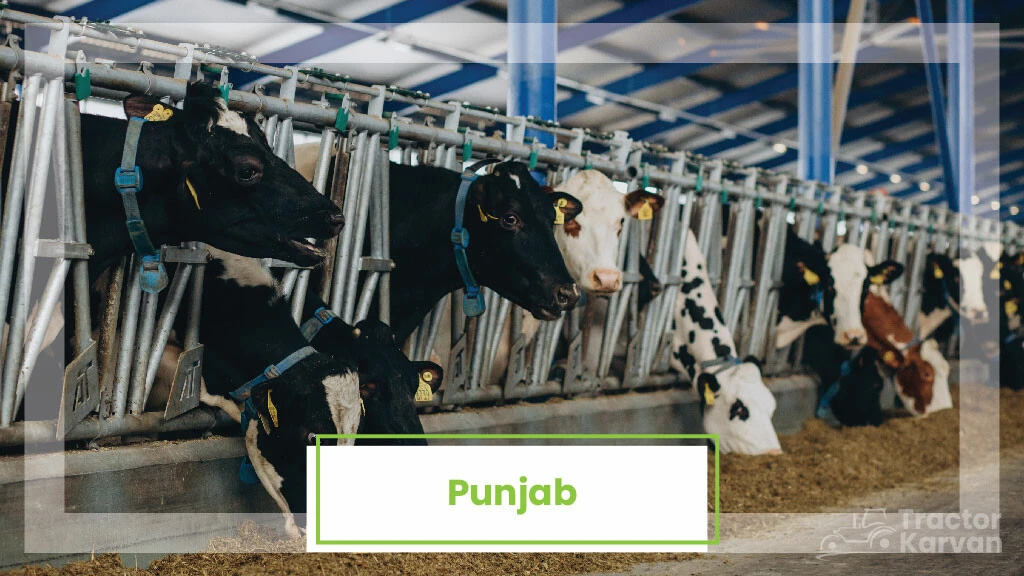
Punjab has a total milk output of 14,874.74 thousand tonnes, accounting for 6% of the total milk production. The cooperative model in Punjab is mostly managed by Punjab State Cooperative Milk Producers’ Federation (MILKFED) under the popular brand name Verka. Also, there are several village societies active at the village level to handle milk production.
The Dairy Development Department was established in 1964 to promote dairy development in Punjab. The improvement in milk production is mainly attributed to improved fodder quality, better milch animals, crossbred cows, and commercialized milk production.
Andhra Pradesh
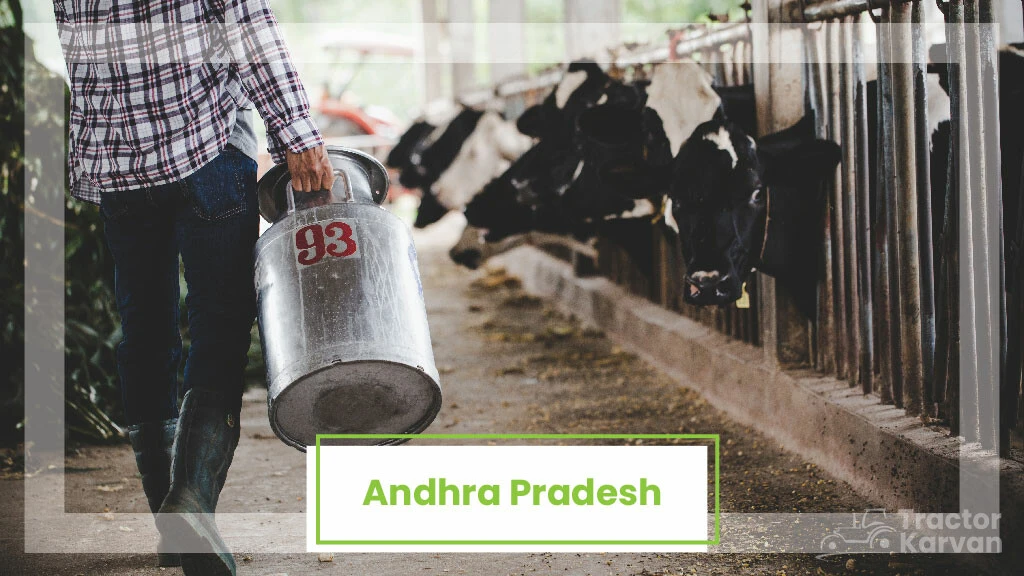
Andhra Pradesh accounts for 5.63% of India's milk production, and the total production is 13,946.13 thousand tonnes. The Chittoor district leads in milk production in this state. The cattle population of this state is 46,00,087 and its buffalo population is 62,19,499. Also, buffalo milk is a major part of total milk production.
In 2020, the Andhra Pradesh Dairy Development Cooperative Federation Limited (APDDCF) was established in collaboration with the Gujarat Cooperative Milk Marketing Federation. Its goal is to empower women from rural regions and strengthen the dairy sector. The AP Milk Procurement & Enforcement of Safety of Milk Standards Act was enforced in 2023 to regulate milk procurement.
The state government's pragmatic policies have achieved high milk production. These policies involve the supply of fodder, Total Mixed Ration (TMR), and silage at subsidy prices. This allows farmers to make higher profits. Also, the Oorura Pasugrasam scheme encourages farmers to grow grass extensively to ensure there is no shortage of fodder.
Karnataka
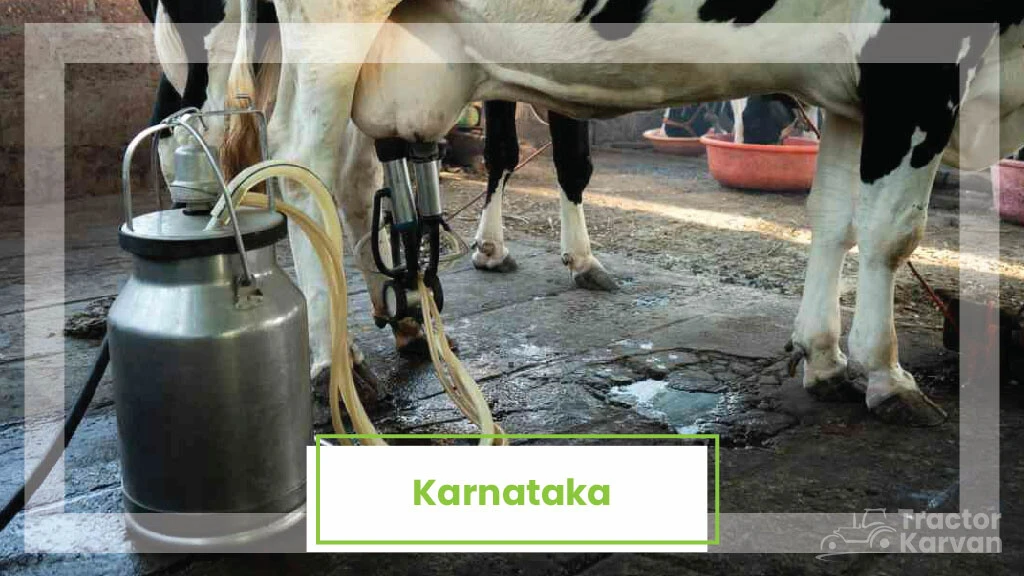
The total milk production of Karnataka is 13,897.53 thousand tonnes, and this makes its share 5.61%. Karnataka Milk Federation (KMF) is the main procurer of milk in Karnataka and Belagavi is the leading milk-producing district.
Nandini is a famous brand of milk and related products in the state. 16 Milk Unions come under KMF, which covers all Karnataka districts via Primary Dairy Cooperative Societies (DCS). The adoption of scientific farming practices, the promotion of cattle health and nutrition, and access to credit facilities have significantly contributed to Karnataka's growth in milk production.
Bihar
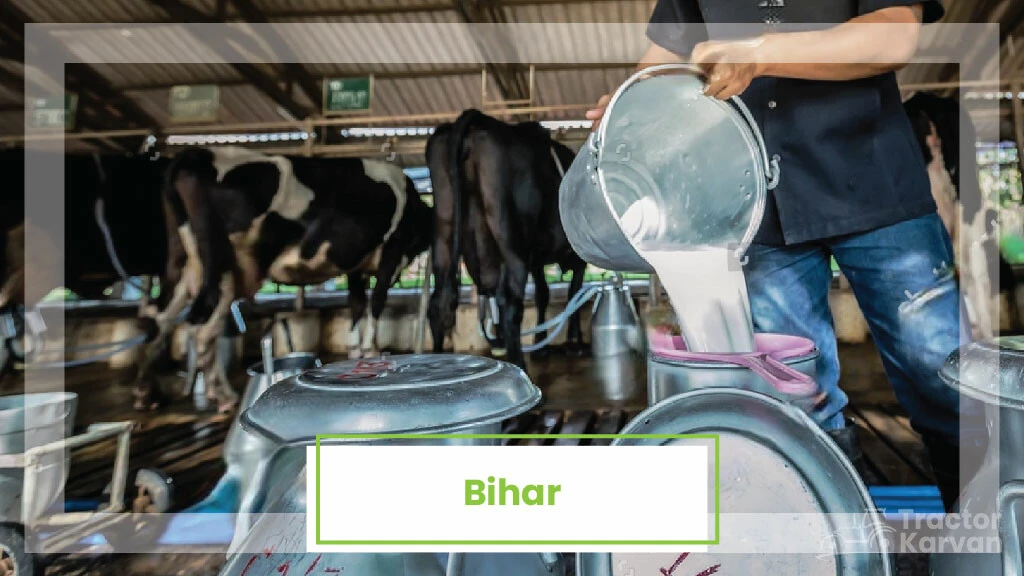
Milk production in Bihar stands at 13,397.69 thousand tonnes with a 5.41% share in total milk production. In 1983, COMFED or the Bihar State Milk Cooperative Federation Limited was formed to develop the dairy sector based on the Anand pattern. This pattern allows a cooperative structure to procure, process, and market the produce.
COMFED has an extensive range of products under the ‘SUDHA’ brand. Farmer’s Training Centres are available in Begusarai, Barauni, and Patna to train society’s functionaries and milk producers in different areas of dairying, such as artificial insemination and clean milk production.
Haryana
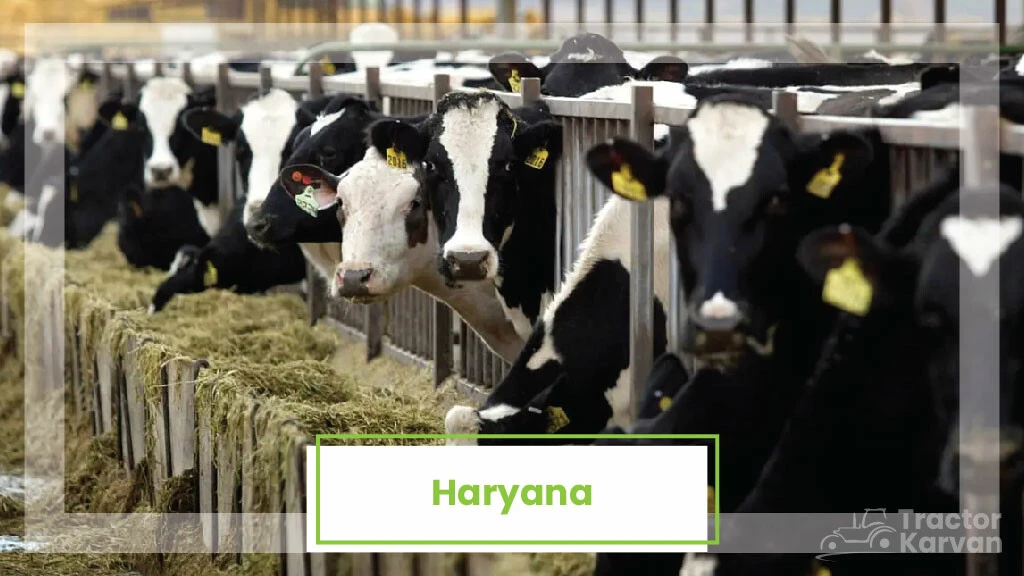
Haryana has high milk production because of its superior cattle breeds. Murrah buffaloes are known as the "Black Gold" of Haryana, and they are famous for high milk yields and rich fat content. Also, indigenous cattle breeds like Sahiwal cows also produce quality milk. The milk production in Haryana was 12,592.75 thousand tonnes, accounting for 5.08% of the total milk production.
Per capita daily milk production has rapidly increased in Haryana due to the intensification of programs aimed at artificial insemination of buffaloes and cows. The state government introduced a scheme to establish hi-tech and mini dairy units in 2023-24. It aims to increase milk and dairy product production and create more employment opportunities. Other key initiatives include awareness drives and schemes to improve animal rearing. Haryana's efforts to ensure the availability of high-quality feed, develop cooperative models and enhance breed management have driven the growth of its dairy sector.
Conclusion
Milk production is a key part of India’s agricultural economy. The top milk producing state in India is Uttar Pradesh and it has provided employment opportunities and has helped in rural development. Different government schemes are provided to help dairy farmers expand and grow their dairy farming business.
Frequently Asked Questions On Milk Producing States in India
1. What is the total milk production in India?
The total milk production in India stood at 247.87 million tonnes in 2024-25.
2. Which state is the highest milk producer in India?
Uttar Pradesh is noted as the largest milk-producing state in India with 38,815.34 thousand tonnes of milk production.
3. Which buffalo is known as the black gold of Haryana?
Murrah buffalo is known as the black gold of Haryana.
4. Which is the famous milk dairy of Punjab?
Verka is the most well-known dairy brand in Punjab.
5. What is the name of the famous milk cooperative of Haryana?
Haryana Dairy Development Cooperative Federation Limited is the milk cooperative in Haryana, and it comes under the brand name Vita.




Related Blogs