Top 5 Rice Producing States in India 2026


Rice is the cornerstone of India’s economy, providing income for millions of households and feeding most of India’s population. India is the world's largest rice producer, accounting for mass level global production. Today’s blog explores the top rice producing states of India along with the popular varieties of each state.
Table of Contents
- Rice Production in India – An Overview
- What are the Top 5 Rice-Producing States in India?d
- Final Thoughts
Rice Production in India – An Overview
Rice is one of the most crucial food grains in India, cultivated extensively across the country. Its cultivation spans from the Gangetic plains in the north to the coastal regions in the south. It is a staple food in India, holding economic significance. In India, rice farming typically begins with the monsoon season, from June to September. This period is also known as the Kharif season, which is ideal for rice cultivation.
India’s favourable climate allows the growth of different rice varieties. Some of the major rice varieties grown in India include Basmati, Mogra, Jasmine, Aizon, Ambemohar, Chakhao, Dubraj, Burma Black, Indrayani, Kolam, and many others. With technological advancements in the agricultural sector, the use of modern tractors and farming implements, such as rice transplanters, has significantly increased rice productivity.
What are the Top 5 Rice-Producing States in India?
According to the National Horticulture Board (NHB), Ministry of Agriculture and Department of Animal Husbandry, the total rice production in India in 2024-25 was 150,184.25 thousand tonnes. Let’s have a look at the top 5 rice producing states one by one:
Uttar Pradesh
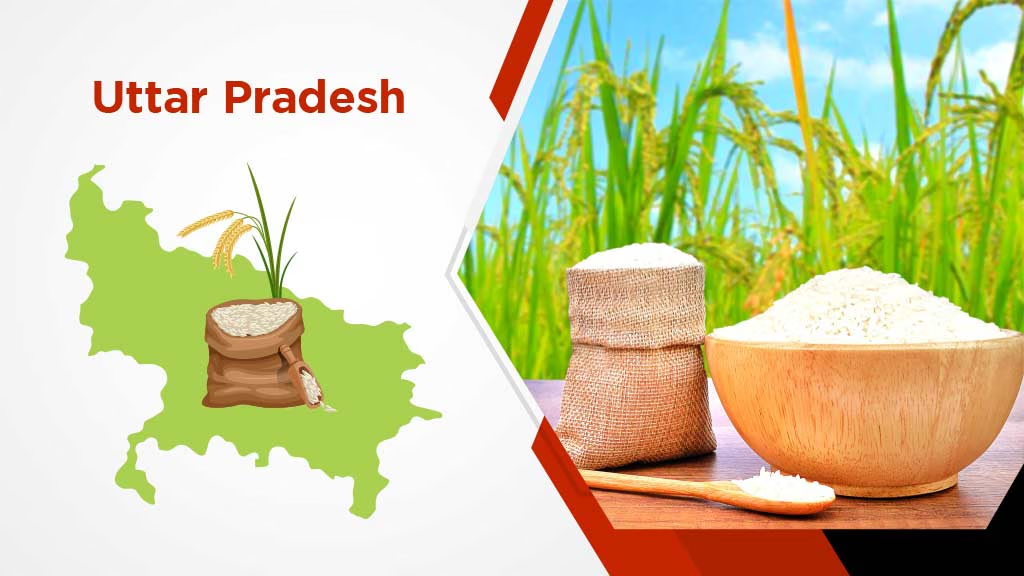
Uttar Pradesh is the top rice-producing state in India. The state contributes about 13.82% of the nation's rice output. In the year 2024-25, the state produced around 20,758.69 thousand tonnes of rice.
Since the state has ideal climatic conditions for rice cultivation, various types of rice are available, such as Basmati, Adam Chini, Tulsi Manjari, and Sona Chura. A special variety of rice that only grows in the state is Kalanamak rice. This rice variety is mainly cultivated in Siddharthnagar and the nearby bordering areas of Nepal. It is known for its unique taste and aroma. Other rice-producing districts include Bahraich, Ballia, Gonda, Azamgarh, Mirzapur, and Lakhimpur Kheri.
Telangana
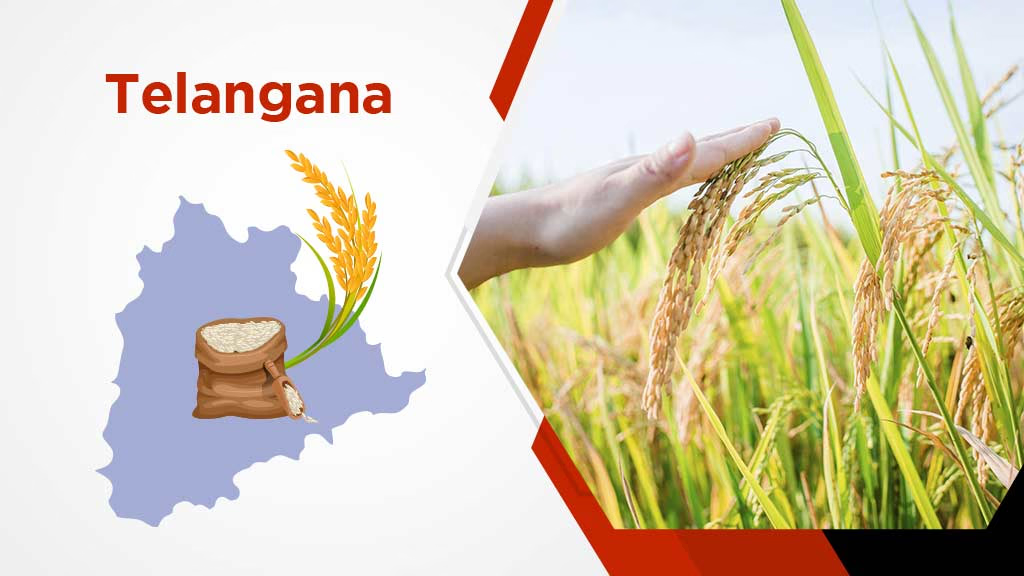
Telangana has quickly become a major player in India’s rice production sector. Rice plays an important role in Telangana's culture, prominently used for cooking and religious purposes. From 2024-2025, the state produced 17,445.68 thousand tonnes of rice, accounting for about 11.62% of the national total.
Popular rice varieties grown in the state include Kunaram 1638, Sannalu, BPT 5204, and RNR 15048, known as Telangana Sona, favoured for its quick cooking and low Glycaemic index. In Telangana, Kamareddy district is the largest producer of rice; other districts with substantial rice production include Nalgonda, Suryapet, Yadadri, Karimnagar, Nizamabad, and Jangoan.
West Bengal
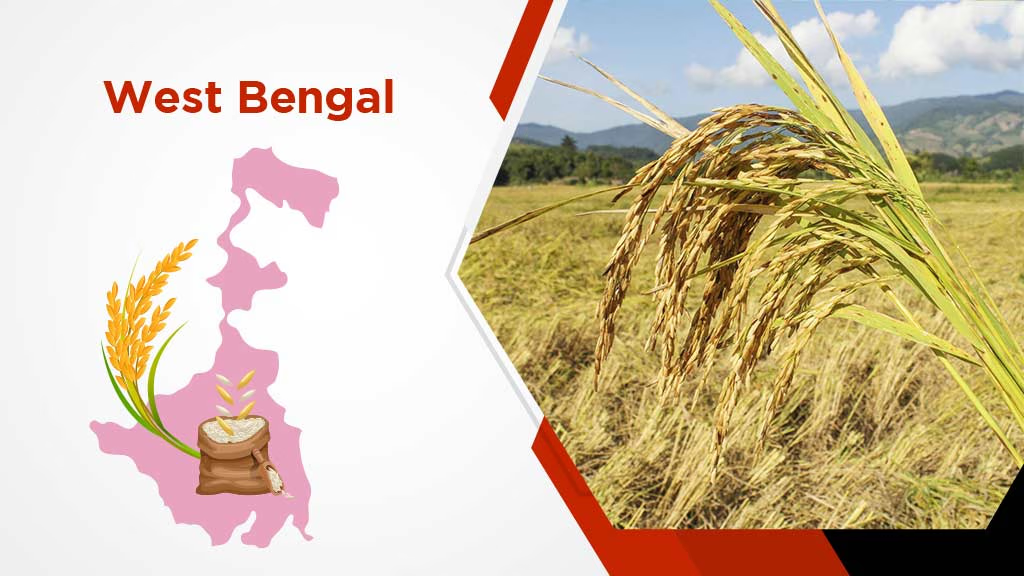
Rice is considered a staple food in West Bengal due to the state’s favourable climatic conditions and plenty of water resources. These two factors contribute significantly to high rice yield in the state. The state ranks third among India's rice-producing states. In 2024-2025, it accounted for 10.67% of the country's total rice production, amounting to around 16,019.39 thousand tonnes.
The state grows high-yielding rice varieties such as Jalprabha, Jamini, and Saraswathi. Other popular rice varieties cultivated in the state include Gobindobhog, Tulaipanji, Kalonunia, Kataribhog, Badshah Bhog, Radhatilak, etc., recognized for their distinctive aroma and taste. Some of the prominent rice-producing districts in West Bengal are Burdwan, Birbhum, Nadia, and Hooghly.
Punjab
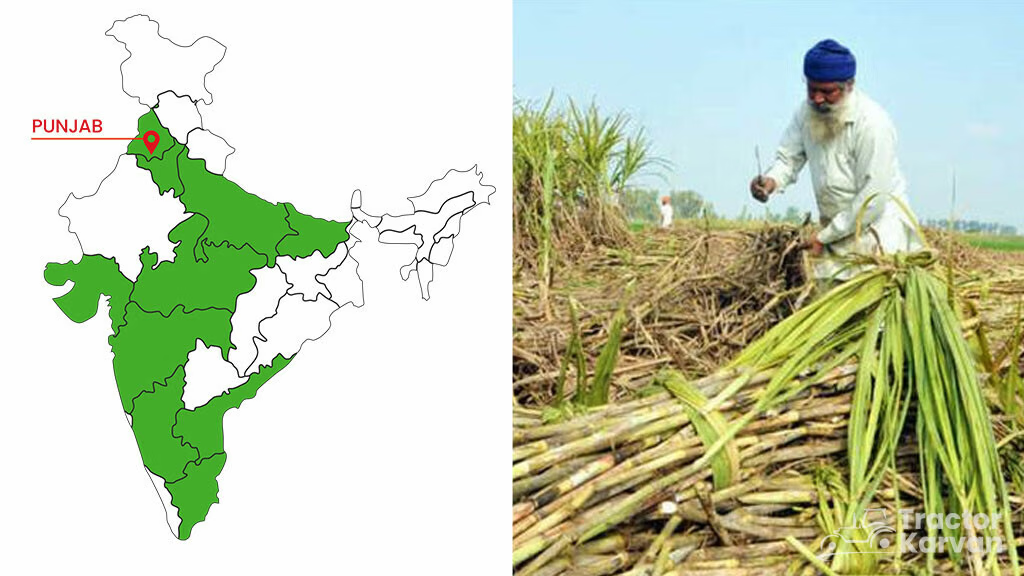
Punjab is also known as 'the rice bowl of India’ due to the state’s significant contribution to the country's overall rice production. Punjab is the fourth-largest rice producer in India, accounting for about 9.56% of the national output. In 2024-2025, the state harvested 14,360.85 thousand tonnes of rice.
Punjab is especially known for producing high-quality Basmati rice, which is mainly grown for export. Notable Basmati varieties include Pusa Basmati 1121 and Pusa Basmati 1509, as well as non-Basmati varieties such as PR 126, PR 121, and PR 106. These varieties are grown in various regions of Punjab, including Barnala, Ferozepur, Fazilka, Sangrur, Tarn Taran, Patiala, Moga, Mansa, Kapurthala, and Faridkot.
Chhattisgarh
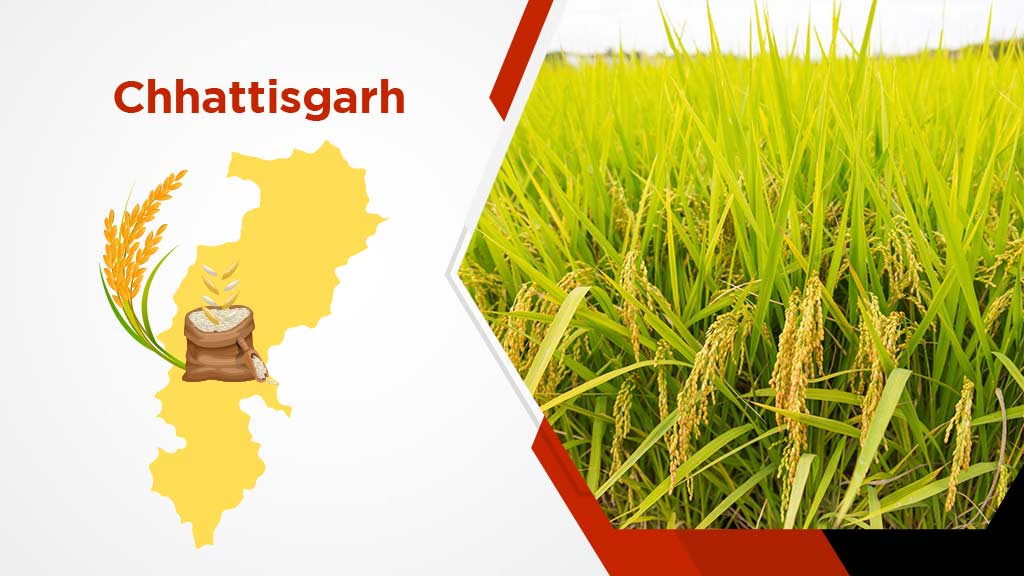
Chhattisgarh is nicknamed the 'rice bowl of central India’. In 2024-2025, the state accounted for 6.90% of India's total rice production, which was around 10,368.45 thousand tonnes.
Chhattisgarh is also home to numerous indigenous rice varieties, notably Jeeraphool, Dubraj, Laicha, Chudi Dhan, and Lal Dhan. Moreover, Raipur, Bilaspur, Durg, Janjgir-Champa, and Kanker are among the state's leading rice-producing districts. Rice is an important part of many tribal and rural communities across the state, and it is often shared during social gatherings and communal feasts. Other important top rice-producing states in India are Orissa, Madhya Pradesh, Bihar, Andhra Pradesh, and Tamil Nadu.
Final Thoughts
Most of the top rice-producing countries are in Asia, with India at the top and China following behind. Rice farming in India serves not only to satisfy local needs but also for export, playing a crucial role in enhancing the nation’s food security and economy. It also has a significant impact on cultural traditions in these areas.
Frequently Asked Questions On Rice Producing States in India
1. How much rice is produced in India?
In the year 2024-2025, India produced 150,184.25 thousand tonnes of rice.
2. Which is the best season for growing rice?
Rice is primarily grown in the Kharif season (June - September) in India.
3. What are the different types of rice grown in India?
Some of the major rice varieties grown in India include Basmati, Mogra, Jasmine, Aizon, Ambemohar, Chakhao, Dubraj, Burma Black, Indrayani, and Kolam.
4. What is India's rank in rice production?
India ranks first among the world's rice producers.
5. Which state has the highest rice production in India?
Uttar Pradesh has the highest rice production in India.




Related Blogs