Mechanized System of Rice Intensification (MSRI) in Paddy Fields in India


Rice is an important staple crop in India which needs high water management for increased yield. One kilogram of rice needs 3000–5000 litres of water. The Mechanized System of Rice Intensification (MSRI) is a method that increases yields by up to 20-30% with reduced labour, seeds, and water demand. Today’s blog explores the benefits of MSRI, best practices, and the equipment or farm tools used in MSRI and the major Government initiatives to support this technology.
Table of Contents
- What is Mechanized System of Rice Intensification (MSRI)?
- Benefits of MSRI in Paddy Farming
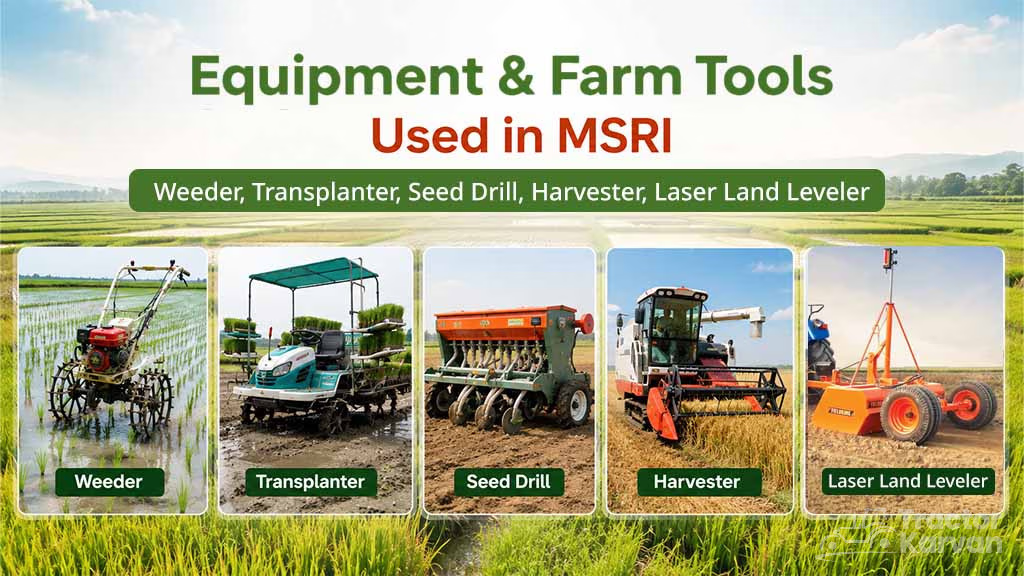
- Equipment & Farm Tools Used in MSRI
- Practices for Implementing MSRI
- What is the Economic Impact of MSRI in India?
- Government Initiatives to Support MSRI in India
- MSRI – A Promising Rice Method in India
What is Mechanized System of Rice Intensification (MSRI)?
Mechanized System of Rice Intensification (MSRI) is a farming method that uses machines for transplanting, weeding and harvesting for more rice cultivation in India with fewer seeds, less labour and minimal water. This technique helps increase rice productivity, soil fertility and profitability. This technique is gaining popularity among farmers as it reduces the labour and cultivation costs and ensures uniformity in seed sowing and plant population thus increasing farm productivity.
Benefits of MSRI in Paddy Farming
The major benefits of Mechanized System of Rice Intensification are given below:
- Higher Yield: MSRI increases yield by up to 20-30% as compared to the traditional method of rice cultivation as it uses young seedlings, intermittent irrigation and wider spacing.
- Improved Quality: This technique increases the rice quality enhancing the nutritional value, grain size and weight and by reducing the pest and disease incidence.
- Low Costs: Due to the less seed, water and labour usage, MSRI helps farmers reduce production costs.
- Reduced Drudgery: It also reduces drudgery of farmers as less labour is required in transplanting, weeding and harvesting.
Equipment & Farm Tools Used in MSRI
Practices for Implementing MSRI
The best practices for implementing MSRI in the paddy cultivation are:
- Select high-quality seeds that are suitable for the climatic conditions and customer preferences.
- Sow seeds at 1-2 kg/100m2 by preparing nursery beds in well-drained soil. Cover the seeds with soil and mulch and water them for optimal growth.
- Prepare the paddy field with proper ploughing, harrowing, levelling and puddling. Also, apply manure at the rate of 5–10 t/ha after ploughing the field.
- Transplanting should be done within 8-10 days using a transplanter at 25–30 cm X 25–30 cm. Plants should not be damaged during the process.
What is the Economic Impact of MSRI in India?
The major economic impact of MSRI includes:
- Increased Income: MSRI helps increase the farmer’s income as it helps in the better yield and quality of rice through which farmers can fetch higher prices in the market. It also reduces the cultivation costs.
- Profitability: As compared to the traditional method of rice cultivation, MSRI also enhances profitability as it improves the cost-benefit ratio of rice production.
- Diversification of Livelihood: MSRI diversifies livelihood of paddy farmers by creating opportunities with processing, value addition, marketing and agrotourism.
Government Initiatives to Support MSRI in India
With multiple benefits, paddy farmers also face some challenges in MSRI such as lack of awareness and farm inputs. To tackle this, the government of India helps them to enhance the MSRI system in their lives by:
- Creating awareness among paddy farmers through demonstrations, field days, trainings and mass media.
- Creating farmer cooperatives, firms and organizations to bring essential knowledge among them and for resource pooling.
- Providing subsidies, loans and incentives to farmers for buying transplanters, seeds, harvesters and other inputs.
- Strengthening value chains for rice and rice by-products, such as compost and straw.
- Integrating MSRI into various programs on rice and water management, biodiversity conservation, soil health improvement, etc.
MSRI – A Promising Rice Method in India
MSRI is undoubtedly a promising method of rice cultivation as compared to the traditional one. It generates the employment opportunities among paddy farmers, increases rice yield, and reduces the labour costs. It also contributes to food security in India and helps in environmental sustainability. If government introduces more initiatives to help paddy farmers, then they can get awareness, useful resources, and fetch good market prices.
Frequently Asked Questions On Mechanized System of Rice Intensification (MSRI) in Paddy Fields in India
1. What is MSRI?
MSRI is a farming method that uses machines for transplanting, weeding and harvesting for more rice cultivation in India with fewer seeds, less labour and minimal water.
2. What does MSRI stand for?
MSRI stands for Mechanized System of Rice Intensification.
3. What are the benefits of MSRI in Paddy Farming?
The major benefits of Mechanized System of Rice Intensification are higher yield, improved rice quality, low costs and reduced drudgery.
4. Which equipment & farm tools are used in MSRI?
The major farm tools used in MSRI are Weeder, Transplanter, Seed Drill and Harvester.





Related Blogs