Organic vs Conventional Farming in India: Key Differences, Benefits, and Challenges


Are you confused about which farming method to opt for? Conventional and Organic farming both play important roles in agriculture. Organic farming relies on natural resources while conventional farming focuses on maximizing crop yields through synthetic fertilizers, pesticides, and modern agricultural practices. In this blog, you will learn about their benefits, differences, and government initiatives.
Table Of Contents
- Understanding Organic and Conventional Farming
- What is the difference between Conventional and Organic Farming?
- What is the need for Organic and Conventional Agriculture?
- What are the Advantages of Organic and Conventional Farming?
- What are the Challenges faced in Organic and Conventional Farming?
- What are the Government Initiatives of Organic Vs Conventional Farming?
- Final thoughts
Understanding Organic and Conventional Farming
Agriculture has evolved over time and the two most important practices adopted by farmers are as follows:
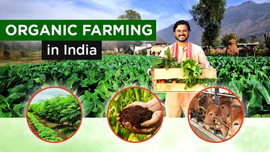
Organic Farming relies on a natural process and ecological balance. This is a sustainable method that uses natural fertilizers such as organic manure, compost, and bio-fertilizers to grow crops. This method is also known as eco-farming, green farming, or biological farming. This helps to improve soil fertility and support biodiversity.
However, Conventional Farming uses chemical fertilizers, pesticides, and modern machinery to maximize crop production. This approach helps farmers grow larger quantities of food in a shorter time.
The excessive use of chemicals can affect soil quality, water resources, and human health over time. As a result, consumers and farmers are exploring better options.
What is the difference between Conventional and Organic Farming?
The differences between conventional and organic farming are mentioned below.
|
Factor |
Organic Farming |
Conventional Farming
|
|
Soil Quality |
Improves soil fertility due to crop rotation and natural fertilizers. |
Soil fertility is reduced over time due to heavy use of artificial chemicals and pesticides. |
|
Water Conservation |
Help preserve water. |
Requires comparatively more irrigation, depending on crop type. |
|
Nourishment |
Use natural manure and organic fertilizers. |
Relies on Synthetic Fertilizers. |
|
Food Quality |
Produces food with high nutritional value. |
Food may contain lower nutrients and higher chemical residues. |
|
Greenhouse Emissions |
Generates lower greenhouse gas emissions per hectare. |
Produces Higher greenhouse gas emissions. |
|
Crop Yield |
Usually lower productivity per acre. |
Higher productivity per acre. |
|
Environmental impact |
Good for environment |
It can contribute to soil degradation, water pollution, and loss of biodiversity. |
|
Cost of Production |
High cost of production due to manual labor. |
Lower labor costs but higher input costs (fertilizers, fuel, pesticides). |
What is the need for Organic and Conventional Agriculture?
Both organic and conventional agriculture help meet the needs of global food demands. Here is a simple explanation of why each is required:
Conventional Agriculture
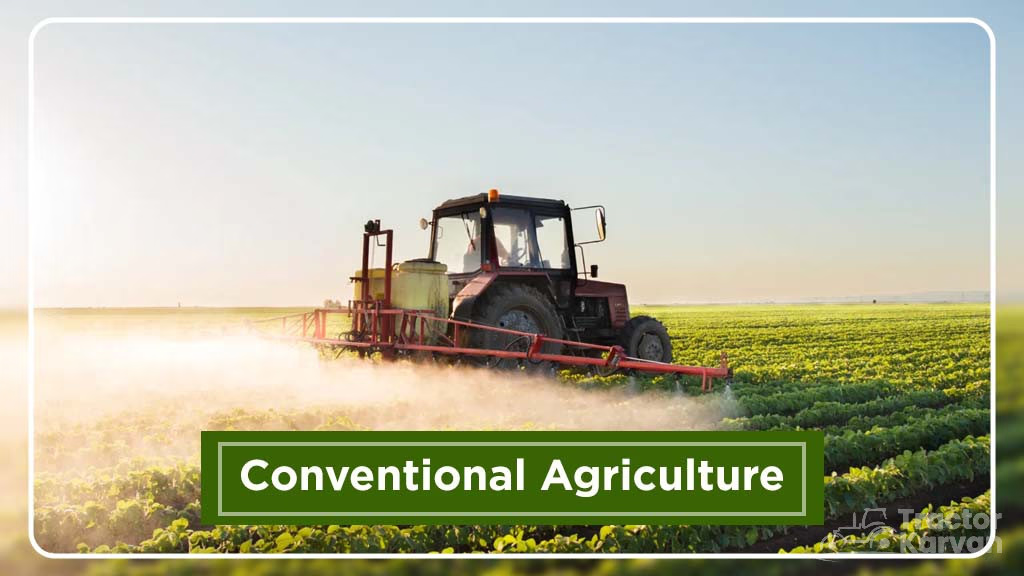
- It helps improve crop production through advanced genetic techniques.
- Relies on synthetic chemical fertilizers for fast plant growth.
- This farming method focuses on producing maximum yields in less time.
- Controls Pests and weeds with synthetic chemicals.
Organic Agriculture
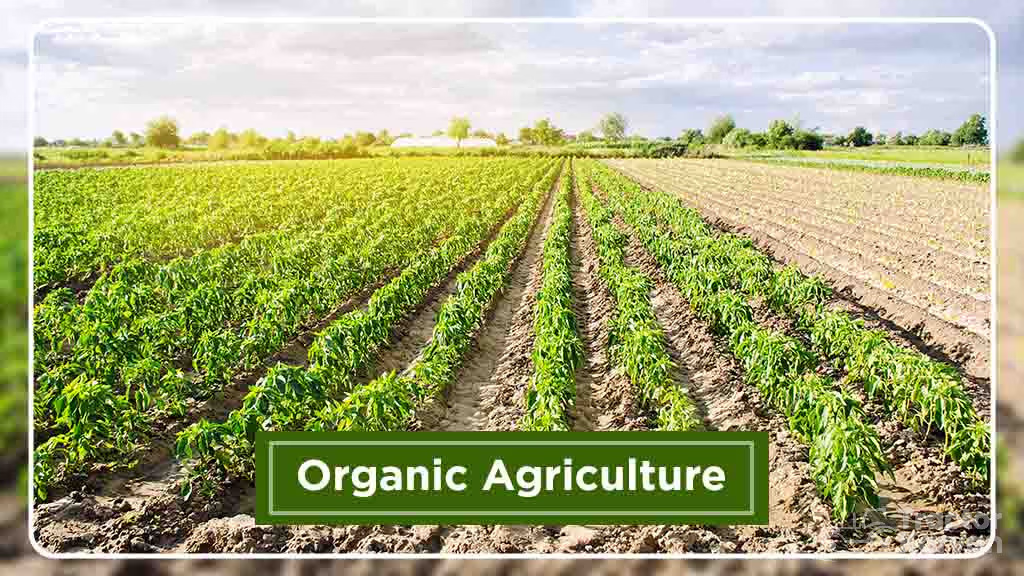
- Protects human health by producing good quality food for consumption.
- Protects and preserves the environment.
- Conserves biodiversity and reduces environmental pollution.
What are the Advantages of Organic and Conventional Farming?
- Conventional Farming is cost-effective because it uses modern technology. While organic farming improves soil fertility through natural farming practices.
- Conventional Farming supports large scale production to meet the growing demand, whereas organic farming produces chemical-free and nutritious food.
- Conventional farming uses advanced technology to maximize crop yield, while organic farming creates more employment opportunities.
What are the Challenges faced in Organic and Conventional Farming?
- Conventional farming relies on chemical fertilizers and pesticides, while organic farming requires more time to manage crops naturally.
- Conventional methods may cause environmental problems such as soil degradation, water pollution, and excessive water use. However, Organic farming does not impact environment as severely but involves higher production costs.
- You can produce higher yield through conventional farming than organic farming.
What are the Government Initiatives of Organic Vs Conventional Farming?
- According to the Press Information Bureau (PIB), the government has increased the budget for the Department of Agriculture and Farmers Welfare from ₹27,663 crore in 2013-14 to ₹1,40,528.78 crore in 2026–27 for agricultural development.
- The government also promotes sustainable farming by supporting initiatives like Paramparagat Krishi Vikas Yojana (PKVY), which supports organic farming and helps with increasing production.
Final Thoughts
Indian agriculture is a diverse field. It’s important to find the right balance between productivity and sustainability. While conventional farming helps meet growing food demands, organic farming protects soil health, biodiversity, and natural resources. Both farming methods have their own importance. Lastly, it is up to Indian farmers to choose the best method that suits their needs and meets market demands.
Frequently Asked Questions On Organic vs Conventional Farming in India
1. What is the main difference between organic and conventional farming?
Organic farming focuses on using natural methods like compost, crop rotation, and biofertilizers to rejuvenate soil health. While Conventional farming relies on synthetic fertilizers and pesticides to increase crop production.
2. Is organic farming better for the environment?
Organic farming is better for the environment as it improves soil fertility and supports biodiversity.
3. Why is conventional farming still used?
Conventional farming is still used because it produces more food at a lower cost, which helps to meet growing food demands.
4. Which type of farming is more sustainable?
Organic farming is more sustainable because it protects natural resources and protects the environment.
5. What is conventional farming?
Conventional farming uses synthetic fertilizers, chemical pesticides, and modern machinery to increase crop yields and improve livestock production.




Related Blogs