India’s agricultural landscape is spread from the fertile plains of Punjab to the red soils of Tamil Nadu. Yet, most of the soil in the country is facing fertility issues and threatening our food security. Therefore, it is essential to implement preventive measures to enhance soil fertility. In this blog, we will discuss the ways to improve soil fertility in India. We will also discuss the factors affecting soil fertility and its importance in Indian agriculture.
Table of Contents
- What is soil fertility?
- What is the Importance of Soil Fertility?
- What are the Factors Affecting Soil Fertility?
- What are the Popular Methods Used to Improve Soil Fertility in India?
- Conclusion
What is soil fertility?
Soil fertility refers to the inherent ability of soil to supply essential crop nutrients and possess favourable physical, chemical, and biological characteristics that serve as a habitat for plant growth. It is the supply of an ideal and balanced amount of nutrients to the crops. However, soil fertility is influenced by the physical, chemical, and biological properties of soil, such as texture, soil structure, soil pH, water-holding capacity, soil micro- and macrofauna, nutrient-supplying capacity, soil biodiversity, and others.
What is the Importance of Soil Fertility?
Fertile soils are equipped with an adequate supply of vital nutrients, such as potassium, phosphorous, nitrogen, and micronutrients, which are important for crop growth, development, and enhanced yield. Plants absorb these nutrients and utilize them for various physiological processes, including fruit formation, protein synthesis, and photosynthesis. Thus, we can say that soil fertility has a direct influence on crop yield and quality. Nutrient-rich soil provides all essential nutrients, resulting in higher crop productivity and enhanced produce quality, including improved appearance, taste, and nutritional content. Soil fertility is important for ensuring sustainable agriculture, maintaining biodiversity, preserving ecosystem health, and providing nutritious food for both humans and animals. Thus, it is essential to follow proper soil management practices to maintain and enhance soil fertility over time, including incorporating organic matter into the soil, applying fertiliser judiciously, and controlling erosion.
What are the Factors Affecting Soil Fertility?
The various factors affecting soil fertility include soil structure, soil pH, nutrient availability, organic matter, microbial life, and many others. Apart from them, deep ploughing during the summer enhances the soil structure and improves the soil’s water-holding capacity, which ultimately influences soil fertility. Let’s discuss some of the factors in brief:
- Soil Structure: A well-structured soil is well aerated, permitting plant roots to grow deeply and access nutrients and water effectively.
- Soil pH: The pH level in the soil affects the availability of nutrients. A soil with neutral pH (around 6-7) is best suited for the growth of most plants. However, some crops thrive in slightly alkaline or acidic soil.
- Nutrient Availability: The soil must be rich in essential nutrients, such as potassium, phosphorus, and nitrogen, to support optimal crop growth and development.
- Microbial Life: Soil fertility and structure can be enhanced by various soil organisms, including bacteria, earthworms, and fungi, which break down organic matter.
- Organic Substance: The presence of organic matter enhances soil texture, increases water retention capacity, and provides a slow-release source of nutrients as it decomposes.
What are the Popular Methods Used to Improve Soil Fertility in India?
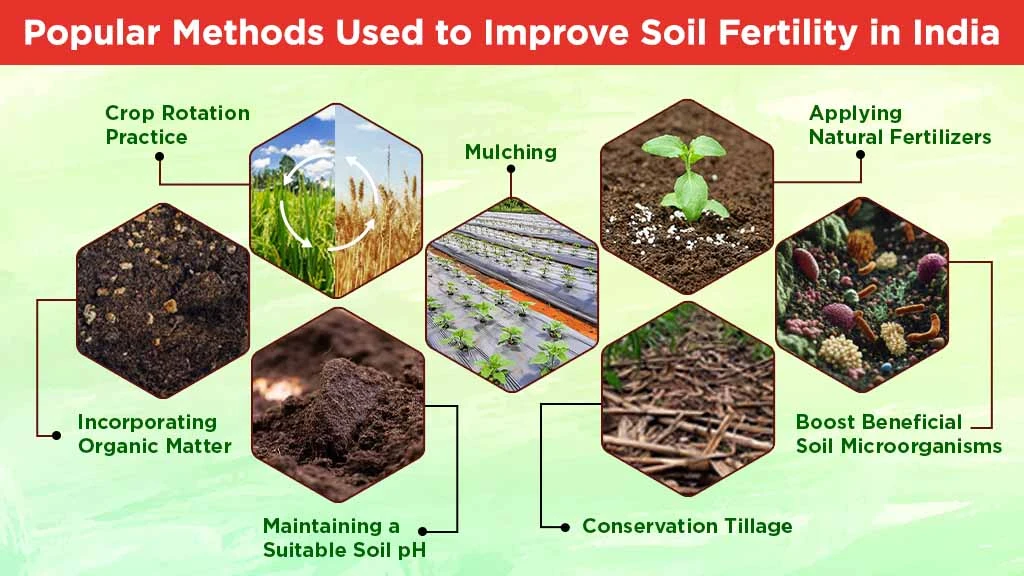
The most popular methods used to improve soil fertility include incorporating organic matter, crop rotation, mulching, applying natural fertilizers, maintaining a suitable soil pH, using minimize tillage, and promoting beneficial soil microorganisms. Let’s discuss each of them in brief:
Incorporating Organic Matter
One of the most effective methods of improving soil fertility is mixing organic matter into the soil. It includes materials like organic manure, which includes both animal manure and green manure, compost, and cover crops that enhance soil structure, improve nutrient availability, and increase water retention capacity.
- Green Manure and Cover Crops: Growing green manure, such as legumes or clover, and cover crops adds organic matter, prevents soil erosion, and boosts nitrogen levels.
- Animal Manure: Using well-rotted animal manure provides essential nutrients to the soil, such as potassium, phosphorus, and nitrogen.
- Compost: Composting crop residues, kitchen scraps, and other organic waste helps create a nutrient-rich amendment for the soil.
Crop Rotation Practice
Crop rotation is the process of planting different crops in a specific sequence to avoid nutrient depletion and minimize pest and disease buildup. Using the crop rotation technique provides soil time to recover specific nutrients. For instance, legumes (such as peas and beans) fix nitrogen in the soil, benefiting nitrogen-demanding crops, such as corn, that follow in the rotation.
- Example of a Simple Crop Rotation Plan: Legumes → Leafy vegetables → Root vegetables → fruiting crops.
- Benefits of Crop Rotation: This method helps improve the nutrient cycle, breaks pest and disease cycles, and enhances soil fertility over time.
Mulching
Mulching in agriculture with organic materials like leaves, straw, or bark adds organic matter to the soil as it decomposes. This process also helps retain soil moisture, suppresses weeds, and reduces soil erosion. Organic mulches eventually break down, enriching the soil with nutrients.
- Tip: Apply a 2-3 inches thick mulch layer around your plants, but don’t pile it directly against the plant stems to avoid rot.
Applying Natural Fertilizers
Natural fertilizers, such as fish emulsion, bone meal, and wood ash, offer specific nutrients that may be lacking in the soil. These fertilizers release nutrients slowly, providing a steady supply of nutrients for plants over time.
- Fish Emulsion: These products are high in nitrogen, promoting healthy growth and lush green foliage.
- Bone Meal: These are rich in phosphorous and suitable for flowering and root development.
- Wood Ash: It is rich in potassium, which is beneficial for fruiting and flowering crops.
Maintaining a Suitable Soil pH
Soil pH has a direct influence on nutrient availability in the soil. Testing the soil can help determine the status of soil salinity, as well as whether the soil is too acidic or alkaline, allowing you to make important adjustments.
- To Raise pH: You can add wood ash or lime.
- To Lower pH: Incorporate sulfur or organic matter like pine needles or compost.
Ensuring that the soil has an ideal pH level is crucial for nutrient absorption, as it enables plants to utilize the available nutrients effectively. Several government initiatives, such as Soil Health Card Scheme, can help you determine the characteristics of your soil.
Conservation Tillage
Excessive tillage practice can disrupt soil structure, harm beneficial microorganisms, and reduce organic matter in the soil. Conservation tillage practice helps prevent soil structure, enhances water retention, and improves microbial health.
- Alternate Method: You can use tools like broadforks to aerate the soil without entirely breaking up the soil.
Boost Beneficial Soil Microorganisms
The role of microorganisms in soil fertility is crucial, as they play a vital part in breaking down organic matter and releasing essential nutrients. Therefore, it is vital to promote beneficial microbes by incorporating compost, minimzsing the use of synthetic chemicals, and maintaining suitable moisture levels.
- Tip: Apply mycorrhizal fungi and beneficial bacteria, which enhance nutrient absorption and plant health. Inoculants featuring these microbes are available and can be applied to the soil directly or as seed coatings.
Conclusion
Improving soil fertility is a powerful step towards enhancing productivity, attaining healthier crops, and promoting sustainable agriculture. Using simple natural techniques discussed above can help farmers create a thriving ecosystem within their soil, minimizing the requirement for chemical inputs and supporting soil health in the long term. Farmers can secure a sustainable and profitable future by investing in soil health, thereby contributing to a healthier environment for everyone.
Frequently Asked Questions On Tips to Improve Soil Fertility in India
1. How to make rich, fertile soil?
You can make rich, fertile soil by incorporating organic matter, crop rotation, mulching, applying natural fertilizers, maintaining a suitable soil pH, using minimize tillage, and promoting beneficial soil microorganisms.
2. How to add nutrients to soil without fertilizer?
You can use organic matter like compost, manure, etc., to add nutrients to the soil without fertilizer.
3. What are common signs of poor soil fertility?
The common signs of poor soil fertility include poor or stunted plant growth, yellowing or discolored leaves, and reduced fruit and seed production.






Related Blogs