Top Agricultural Tools in India for Your Farming Needs


Tractors are versatile machines that can efficiently perform well when paired with the right agricultural tool. From soil preparation to crop protection, the right tool helps farmers improve productivity and save time. In this guide, we will explore the top agriculture tools in India, and how they support better crop yield and farm management.
Table of Content
- What are Agriculture Tools?
- Need for Agriculture Tools in Farmer’s Life
- What are the Modern Farming Tools used in Agriculture?
- Which are the Traditional Farming Tools?
- Final Thoughts
What are Agriculture Tools?
Agriculture tools are farming equipment, which can be used to carry out a variety of farm tasks efficiently. They can be manually operated or powered using a machine. These agricultural tools play an important role in improving production by reducing effort and time. Today, we will learn in detail about the top tools that farmers use in modern farming.
Need for Agriculture Tools in Farmer’s Life
- Agriculture tools make farming easier by speeding it up, increasing efficiency and productivity.
- These tools help reduce manual effort and ensure optimal resource management.
- Farmers can use these agricultural tools to cover a larger area of fields, which helps with the precise application of seed, fertilizer, and pesticides.
What are the Modern Farming Tools used in Agriculture?
Modern agricultural tools help to increase yields by improving the efficiency of everyday farming operations. Let's explore the different farming tools mentioned below:
Plough
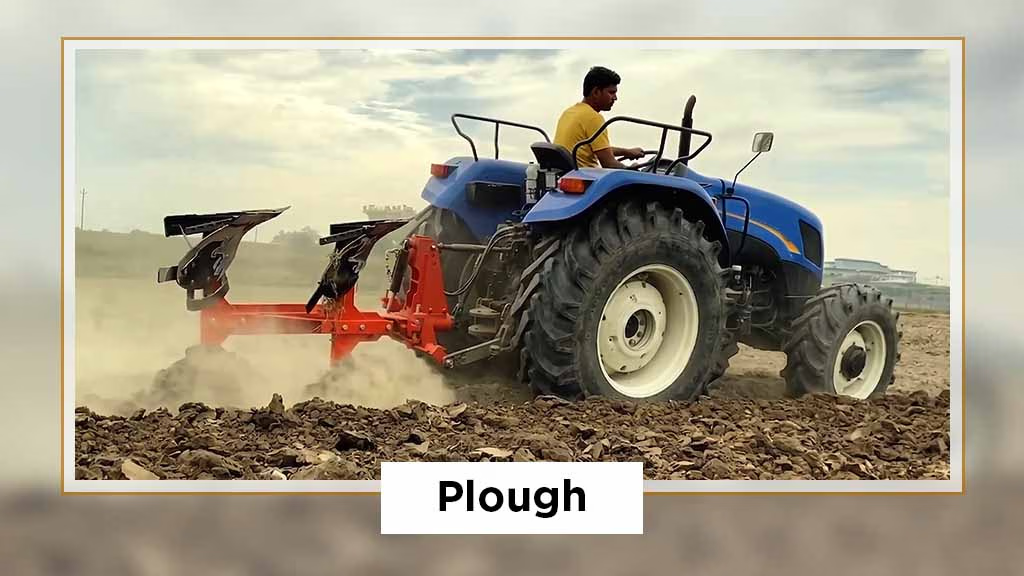
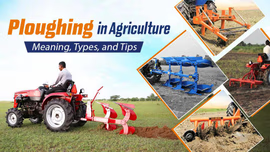
A plough is one of the most important tractors implement, which is mainly used for preparing the soil by turning and loosening it, mixing in organic matter, and enhancing aeration.
Main Purpose – Breaking hard or compacted soil, burying weeds, and mixing crops remain in the ground.
Types – MB plough, disc plough, chisel plough, subsoiler
Best For - Deep tillage before sowing, Mixing crop residues into the soil
Some of its popular models are as follows:
|
Popular Models |
Tractor Power Required |
Starting Price* |
|
45 |
₹76,110 |
|
|
65-75 |
₹47,336 |
|
|
50+ |
₹1,39,000 |
|
|
45+ |
₹64,010 |
Rotavator
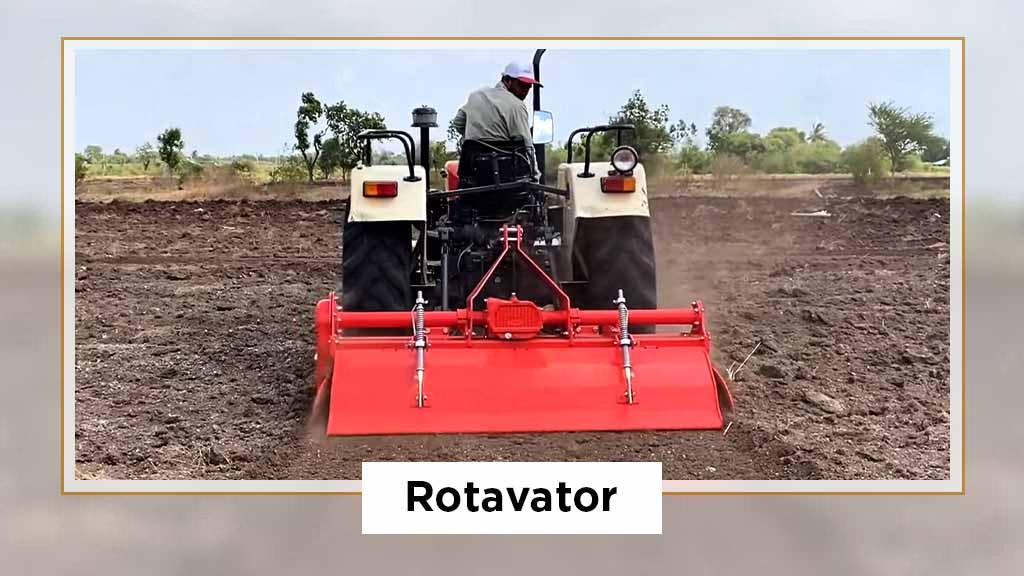
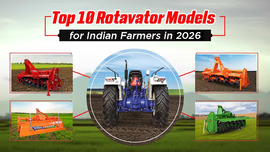
A rotavator is a tractor-mounted agricultural implement, used for soil preparation. It works with rotating blades that break, crush, and mix the soil, creating a fine seedbed for planting.
Applications of Rotavator
- Chops and mixes soil and crop residues
- Prepares land for tilling and planting
- Helps in mixing fertilizers and chemicals
- Supports intercultural operations
Best suited for: Quick land preparation before sowing crops like wheat, rice, or maize, especially where crop residue management is required.
Popular Rotavator models in India: Shaktiman Tusker SRT-6, Lancer HP 185, Landforce Robusto 12 FT
Cultivator
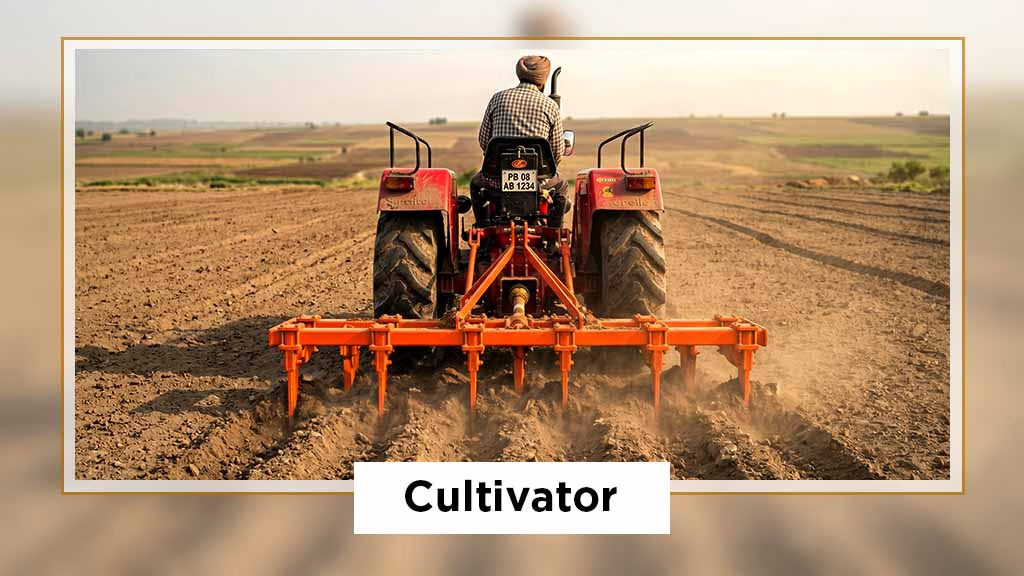
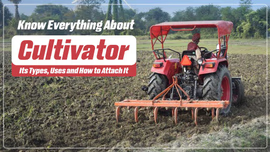
A cultivator is an agricultural tool that is used to loosen, break, and aerate the soil for better plant growth. It helps create a suitable seedbed by improving soil structure and mixing nutrients, such as organic matter.
Uses of Cultivator
- Prepares soil by loosening and creating a fine seedbed
- Controls weed by uprooting and disrupting growth
- Improve aeration for better water and nutrient flow
- Mixes fertilizers and enhances overall soil structure
Recommended for: Farmers of all scales who want it for primary or secondary tillage in hard soil conditions.
Popular Cultivator models in India: Vishwakarma Yug 15, Fieldking Double Coil Tyne FKDCT 9 , Fieldking Double Coil Tyne FKDCT 15
Power Tiller
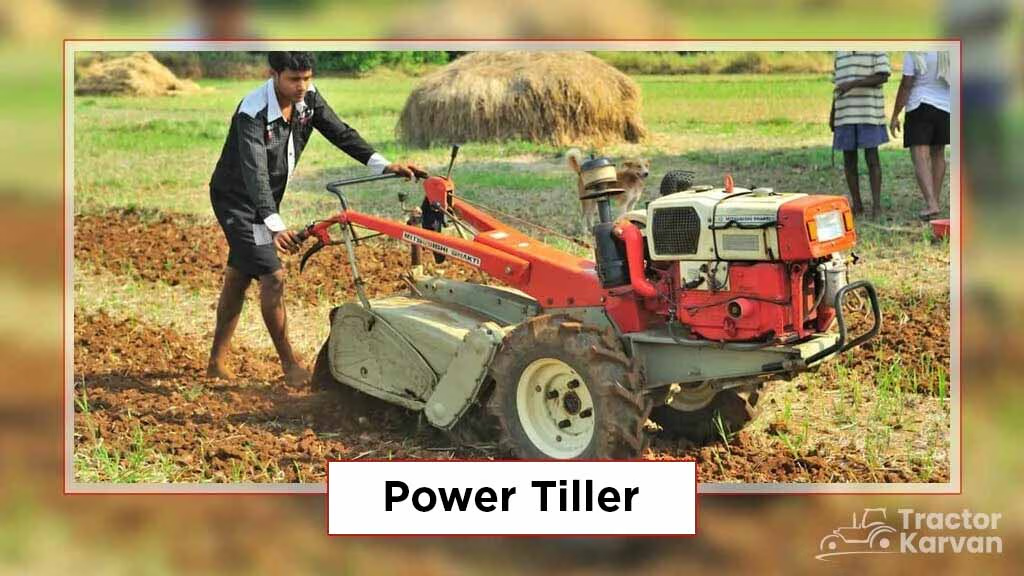
A power tiller is a mechanized agricultural tool, also known as a compact walking tractor, used for soil preparation. It is powered by an engine which drives rotating blades to loosen and aerate the soil. Power tillers help in mixing fertilizers, compost, and crop residues into the soil, enhancing fertility.
Advantages of Power Tiller
- Saves time and reduces manual labour in field preparation.
- Improves soil aeration and creates a fine seedbed for crops.
- Help mix fertilizers and organic matter evenly in soil.
Well suited for: Small and marginal farmers in areas where tractor-based farming operations are not accessible.
Popular Power Tiller models: VST Shakti 135 DI
Power Weeder
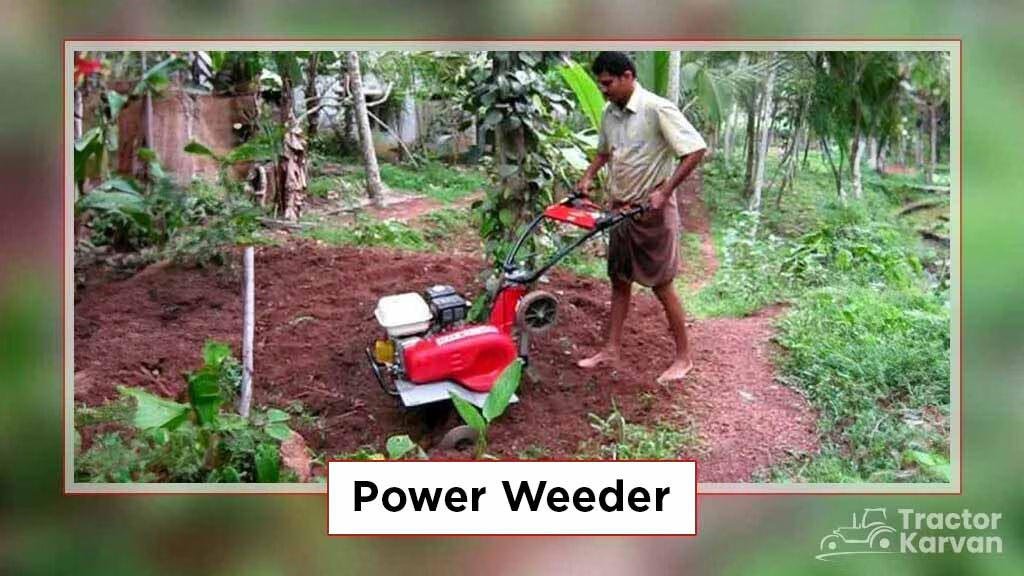
A power weeder is a farming tool that is used by farmers in removing weeds and preparing soil for planting. It works with rotating blades that loosen the soil and helps by improving the air flow, which overall contributes to the crop's growth. It is also used in mixing fertilizers or compost evenly into the land.
Key Benefits of Power Weeder
- They are best for dry to slightly moist soil
- Performs well in row crops with adequate spacing between plants
- It is suitable for flat or gently sloped fields
Best For: Farmers growing row crops like vegetables, sugarcane, or cotton, etc.
Popular models: VST Shakti FT 55 GE, and VST Shakti PG 50 .
Sprayer
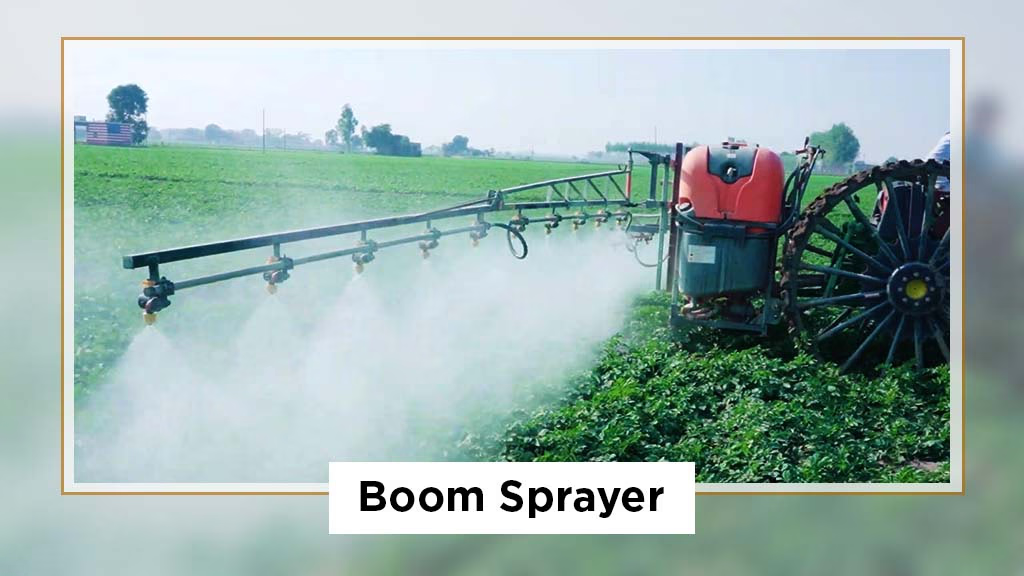
A sprayer is an agricultural tool used for spraying liquids like pesticides, fertilizers, and water on crops. It is preferred by farmers for protection and nourishment of plants.
Types: Boom sprayer and Self-propelled boom sprayer.
Key benefits: Pest control, save time, reduce labour, and increase crop yield.
Suitable for: Farmers who need to apply pesticides, fertilizers, or protect plants regularly.
Seed Drill
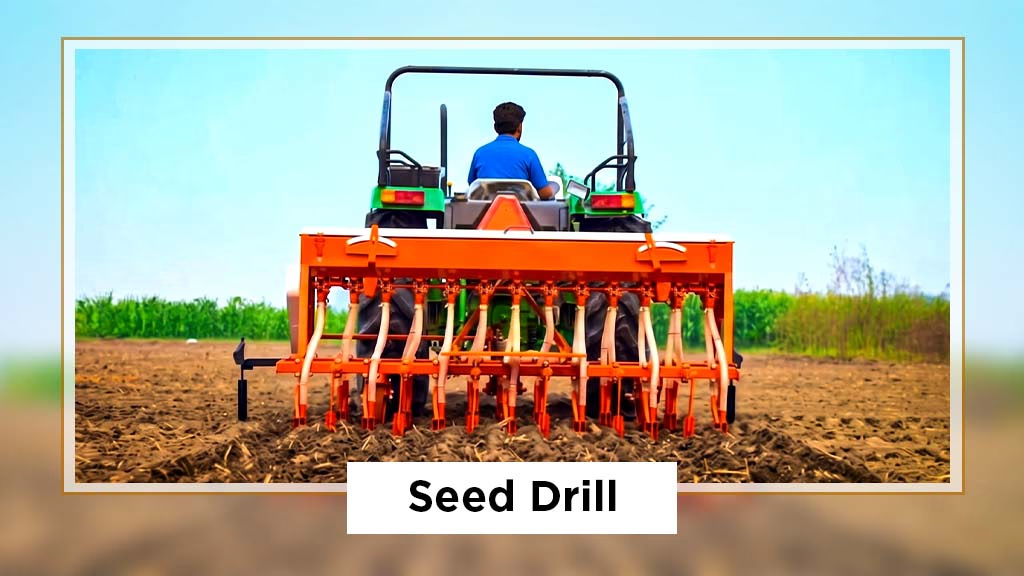
A seed drill is a tool to place seeds into the soil at the correct depth and spacing. It helps them achieve uniform planting, which improves crop growth and reduces seed wastage.
Key Benefits
- Ensure uniform seed placement and proper spacing.
- Saves seeds, time, and labour while improving yield.
Best For: Farmers managing medium to large fields who want uniform seed spacing, better germination, and minimal seed wastage.
Popular Seed Drill models in India: Shaktiman SMSD 250, Farmking FKSFD-C/9 , Bhoomi Agro Automatic BASCFD11
Brush Cutter
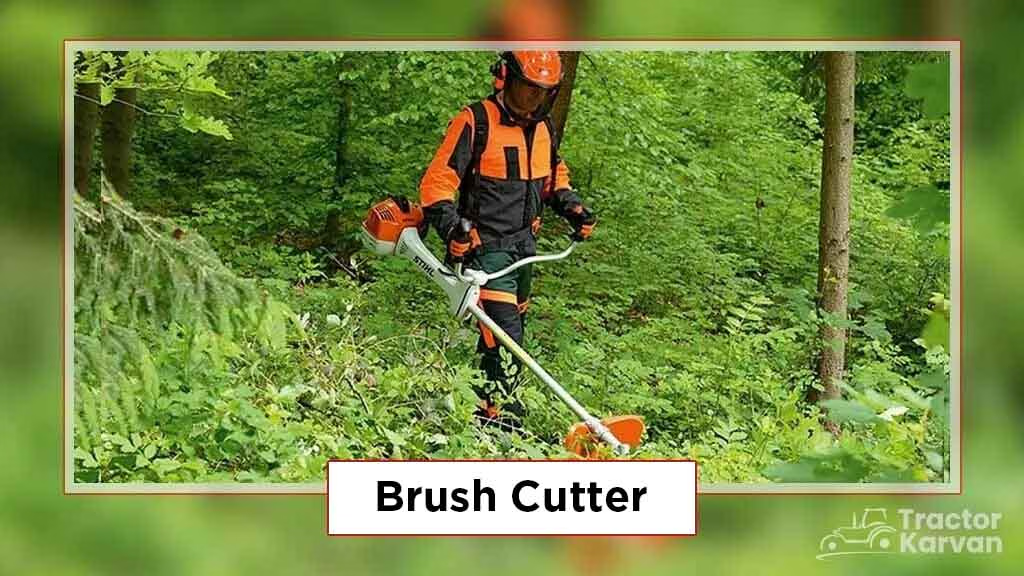
A brush cutter is a portable cutting machine used to trim grass, weeds, and dense vegetation. It is used for clearing fields, removing unwanted plants, and maintaining farm areas. It helps save time and reduces manual effort.
When to Use It:
- When clearing overgrown grass, weeds, and small shrubs in fields or along boundaries
- Before land preparation to remove unwanted vegetation quickly
- For maintenance of orchards, plantations, and roadside edges
- In areas where tractors or larger machines can’t easily reach
Ideal For: Farmers and orchard owners for quick grass, weed, and bush clearing.
Power Reaper
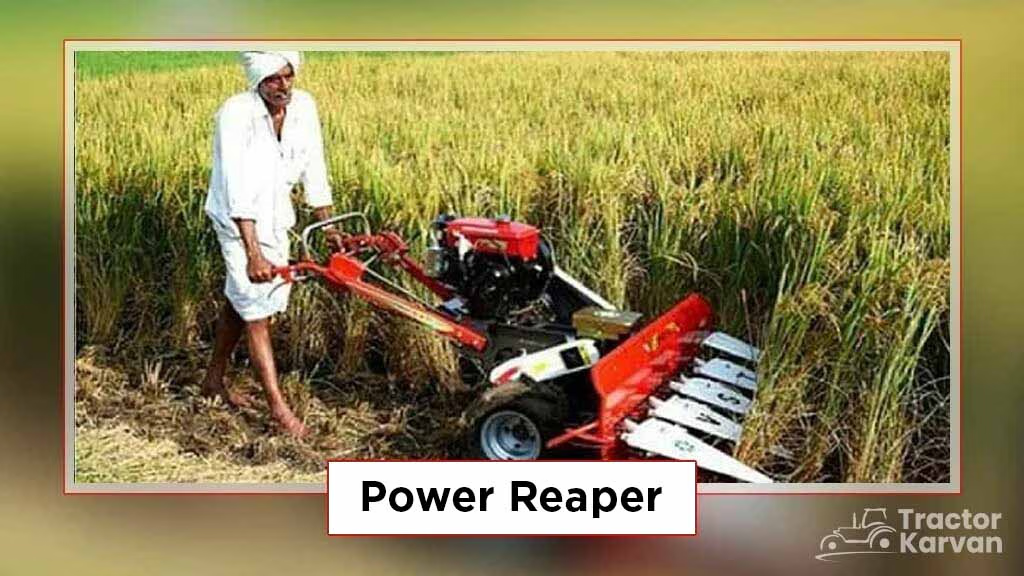
A power reaper is an agricultural harvesting machine which can cut crops like wheat and paddy quickly. It helps farmers reduce manual harvesting time by working much faster than traditional methods. This machine can be attached to tractors or used as self-propelled, that makes harvesting easier and more productive.
Key Benefits
- Increases harvesting speed and farm productivity
- Reduces labour cost and effort for farmers
Best for: Farmers who need a harvesting machine that quickly cuts grain crops like wheat and paddy, saving time and reducing labour effort.
Thresher
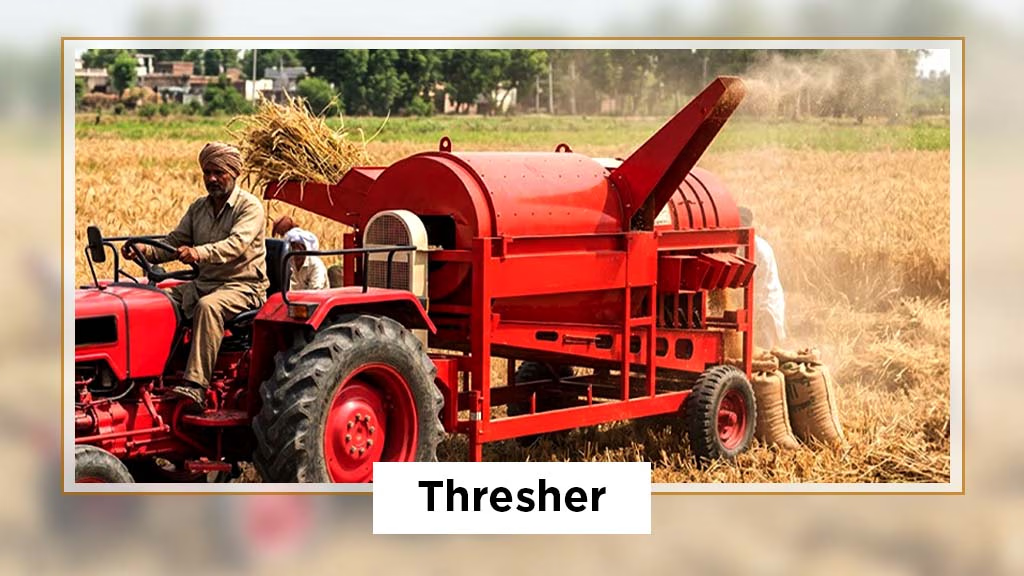
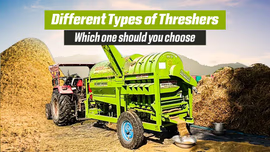
A thresher is an agricultural implement that is used for separating grains from husk or straw after harvesting. It helps farmers save time and labour by quickly cleaning and processing crops like wheat, paddy, soybeans, and more. This machine improves grain quality and increases overall farm productivity.
Crop Compatibility: These machines are compatible with multiple crops such as wheat, maize, paddy, soyabean, etc.
Suitable for: Farmers who are involved in bulk harvest and need quick separation of grains from straw after harvesting.
Popular Thresher models: Manku Paddy Thresher.
Which are the Traditional Farming Tools?
- Axe: An axe is used to cut thick substances such as wood. It easily cuts small trees, shrubs, or thick undergrowth.
- Rake: Rakes have teeth or tynes on one side and are used to collect leaves, grass, and other debris from the ground.
Final Thoughts
To summarize, farming has become more convenient thanks to various agricultural tools. These tools are highly significant for farmers as they improve the overall farming experience, making them popular agriculture tools that farmers can have at their disposal. Farmers can also explore our implement loan page to understand financing options for agricultural implements.
Frequently Asked Questions On Agriculture Tools in India
1. What are agriculture tools?
Agriculture tools are implements used by farmers to perform various farming activities such as ploughing, sowing, watering, and harvesting efficiently.
2. Which agricultural tool is best for soil preparation?
A rotavator and power tiller are commonly used for soil preparation as they break and level the soil efficiently.
3. What is the difference between manual and modern agriculture tools?
Manual tools require human effort (like a rake or axe), while modern tools are powered by engines or tractors (like rotavators and power tillers), making tasks faster and easier.
4. Which traditional tools are used in agriculture?
Hay Rake, Axe, Machete, Pruning Saw, etc. are the traditional tools used in agriculture.
5. What is the use of seed drills?
A seed drill is used to sow seeds at the correct depth and spacing, ensuring better germination and reducing seed wastage.
6. How does a sprayer help farming?
A sprayer is used to apply pesticides, herbicides, and fertilizers evenly across crops, helping protect them from pests and diseases.





Related Blogs