Different Types of Bananas Cultivated in India: A Complete List


Banana is a popular dessert fruit in many parts of India and is the second-most important fruit after mango. India is the world's largest banana producer, accounting for 26.45% of global banana production. In this blog, we will explore key varieties of bananas available in India. Let’s dive into the blog for a better understanding.
Table of Contents
- An Introduction to Banana Varieties in India
- What are the Popular Types of Bananas in India?
- Robusta
- Dwarf Cavendish
- Rasthali
- Poovan
- Nendran
- Red Banana
- Ney Poovan
- Virupakashi
- Panchanadan
- Monthan
- Karpuravalli
- Safed Velchi Musa
- What are Some of the Newly Developed Varieties of Banana?
- Key Takeaways
An Introduction to Banana Varieties in India
Banana is the most important fruit after mango and is widely known in India for its nutritional value. The fruit is known for its sweet taste and is consumed both as a ripe fruit and for cooking purposes. In India, there are many dishes made from bananas, such as banana halwa, banana bread, banana shake, and banana chips. The fruit is rich in fibre, minerals, and vitamins. It is also a good source of energy, which is why it is also recommended by dietitians as part of a healthy diet. In some parts of the country, banana plant leaves are also used as a plate to serve food.
What are the Popular Types of Bananas in India?
Bananas have been known in our country since ancient times, and India is home to over 50 varieties. However, banana cultivation in India primarily focuses on 15–20 varieties. Below is a list of the most famous varieties of banana in India. Let’s understand the various types of bananas in detail.
- Robusta
- Dwarf Cavendish
- Rasthali
- Poovan
- Nendran
- Red Banana
- Ney Poovan
- Virupakashi
- Panchanadan
- Monthan
- Karpuravalli
- Safed Velchi Musa
Robusta
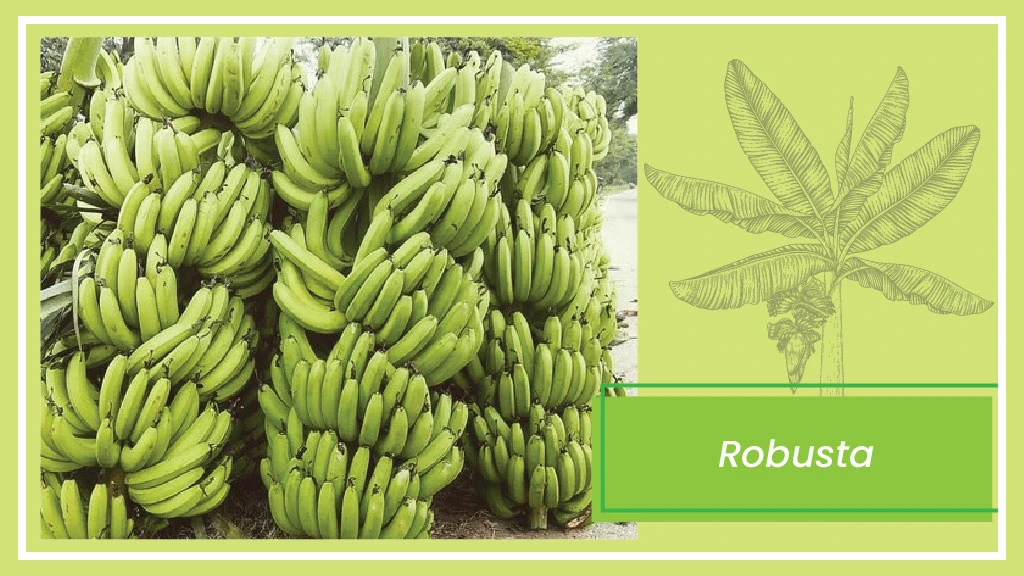
Robusta is a widely known banana variety in India. It is semi-tall and grows mostly in Tamil Nadu, Andhra Pradesh, Maharashtra and some parts of Karnataka for table purposes. Among these, Kadapa district in Andhra Pradesh is known as the largest producer of the robusta banana variety in India.
Some of the key characteristics are:
- It is a high-yielding variety with dark green leaves that turn bright yellow upon ripening.
- It produces bunches weighing 25–30 kg and has a sweet aroma.
- It is often used in cooking and is a popular ingredient in South Indian cuisine.
However, the storage and transportation of these bananas is a challenge. Also, these banana varieties are susceptible to Sigatoka leaf spot, a very destructive disease of bananas.
Dwarf Cavendish
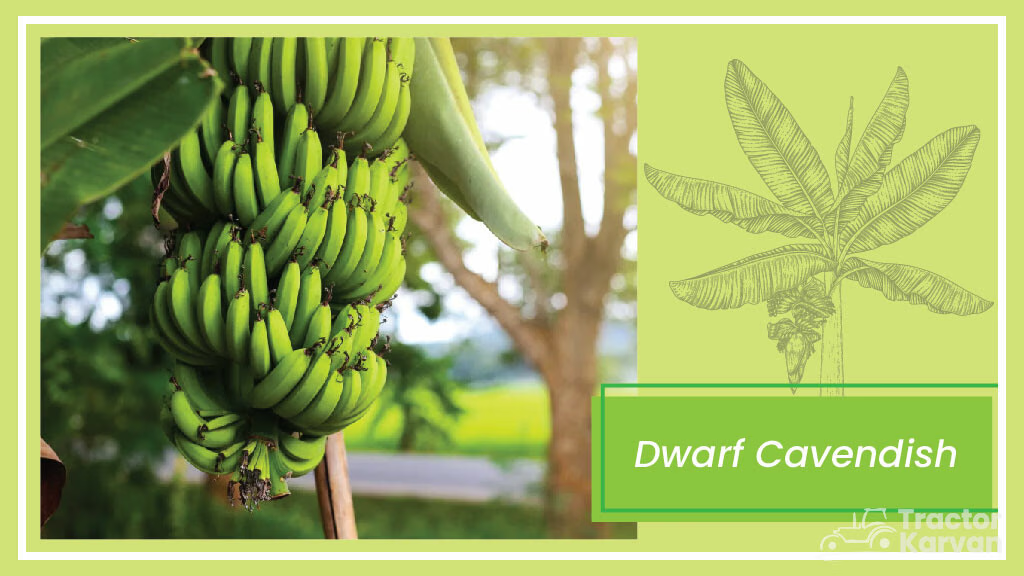
Dwarf Cavendish is one of the most widely cultivated banana varieties in India. It is widely known and is grown extensively for table and processing purposes in the states of Maharashtra, Gujarat, Bihar, and West Bengal. Among these, Jalgaon district in Maharashtra is the largest producer of the Dwarf Cavendish banana variety.
'Basrai' is the leading commercial variety of the Cavendish group of bananas cultivated in Maharashtra. It is also popular in Andhra Pradesh, Karnataka, and Tamil Nadu.
The key features are:
- It is dwarf in stature, which makes it less prone to wind damage.
- Its bunch weighs around 15-25 kg.
- This variety also performs well under light soils.
- It is green in colour, which remains the same even after ripening.
In India, these types of bananas are often used in desserts such as banana bread, banana pudding, and banana chips.
Rasthali
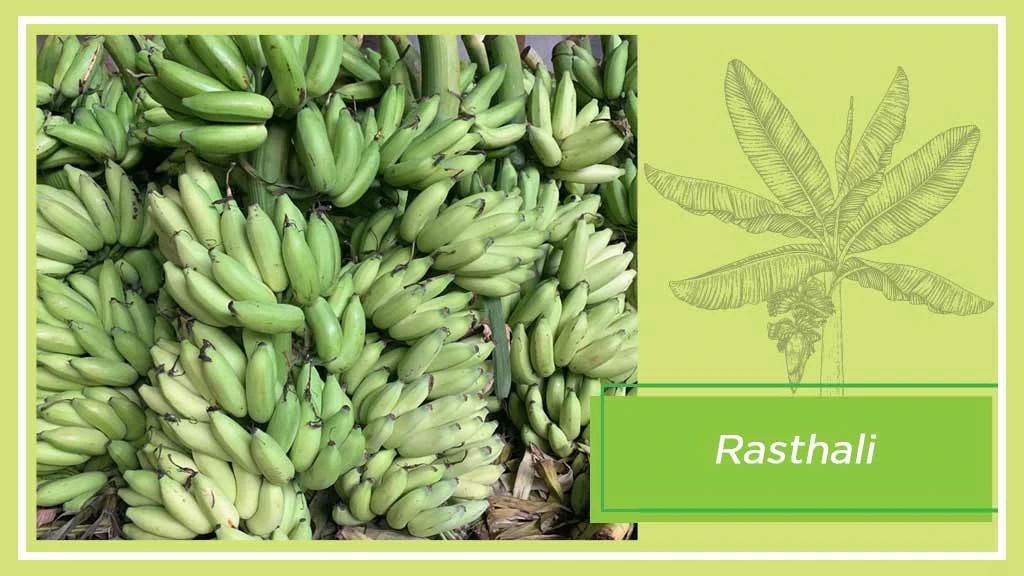
Rasthali, also known as the silk variety of banana, is widely popular and grown in southern states like Tamil Nadu, Andhra Pradesh, Kerala, Karnataka, and Bihar. Amongst these, Tiruchirappalli district in Tamil Nadu is known as the largest producer of Rasthali banana in India.
Some of the key features are:
- It is a mid-tall banana variety and is a highly priced cultivar for table use.
- This variety ranks among the best banana varieties in terms of taste and aroma.
- Throughout its development, it has a yellowish-green colour but turns pale to golden yellow after ripening.
- It has thin skin that peels easily, and its texture resembles silk, which is why it is also known as silk banana.
- These bananas are usually eaten as a snack when fully ripe or used in cooking, particularly in South Indian cuisine.
However, cultivating this banana variety is expensive due to factors such as a longer crop duration, susceptibility to Fusarium wilt, and the formation of hard lumps.
Poovan
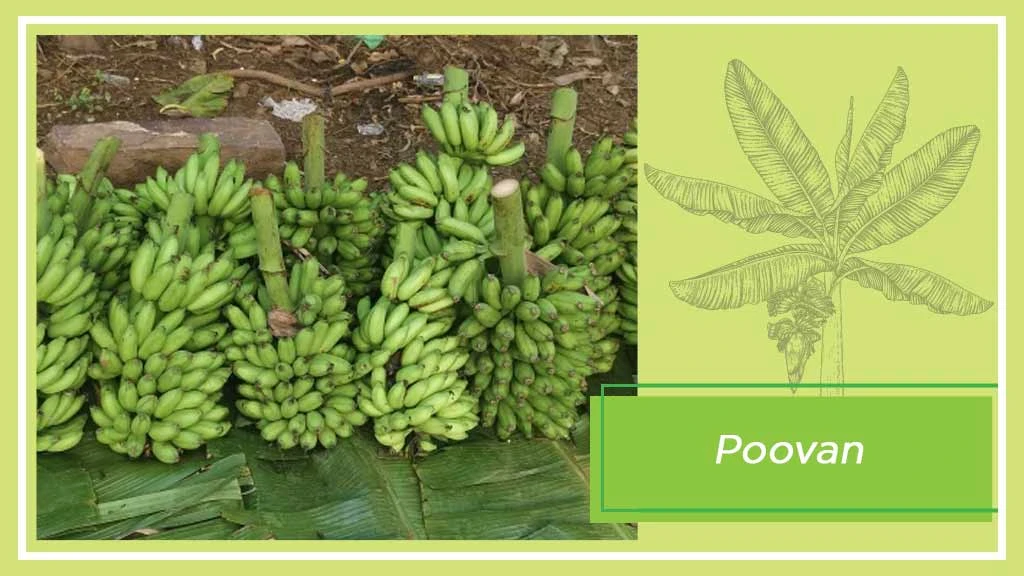
Poovan is also known as Champa or Mysore. It is one of the major commercially cultivated crops nationwide. It is widely grown in Karpura Chkkarakeli in Andhra Pradesh, Alpan in the Northeast Region, Poovan in Tamil Nadu, and Palayankodan in Kerala. Due to its climatic and marginal soil conditions, Tiruchirappalli district in Tamil Nadu is the largest producer of Poovan banana.
Some of the key characteristics are:
- The fruit is slightly acidic and firm, with an attractive golden-yellow colour.
- It is known for its sour-sweet taste and aroma.
- It is a medium-sized variety with good quality.
- It is resistant to fruit cracking, which makes this variety different from others.
These bananas are generally cultivated as perennial crops. In Tamil Nadu and certain regions of Kerala, it is cultivated commercially for the leaf industry.
Nendran
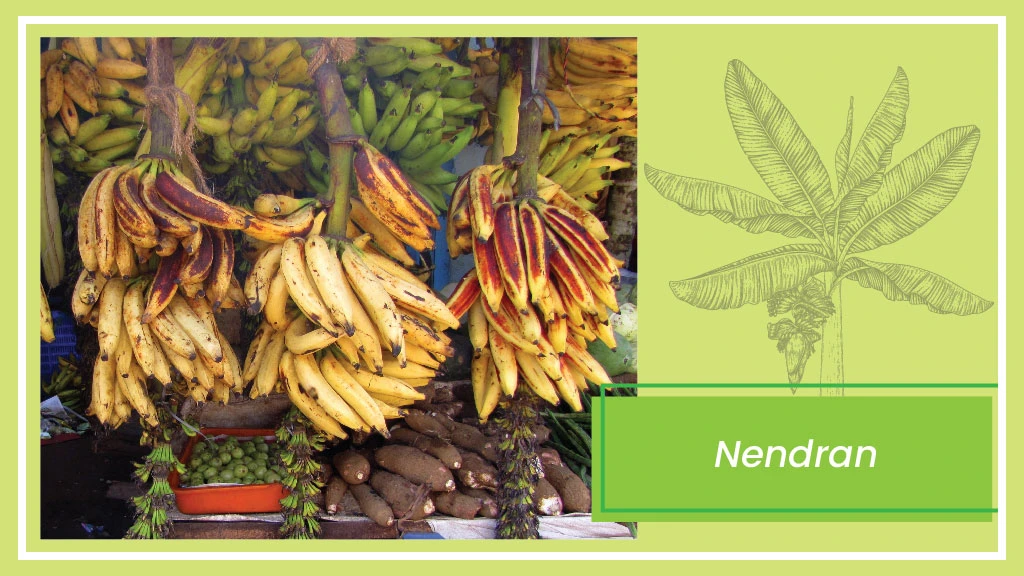
Nendran is a popular variety of bananas in Kerala. It is not only used as a fruit but also in processing. This variety is widely valued for its versatility. They are often used for making traditional dishes and tasty snacks. Also, the Theni District in Tamil Nadu is one of the largest producers of the Nendran banana variety in India.
Some of the key features are:
- It has pseudo-stem colour in the early stages of its growth.
- The bunch has 5-6 hands, each weighing 12-15 kg.
- These bananas are green, turning buff yellow when ripe.
- It remains starchy even after ripening.
Red Banana
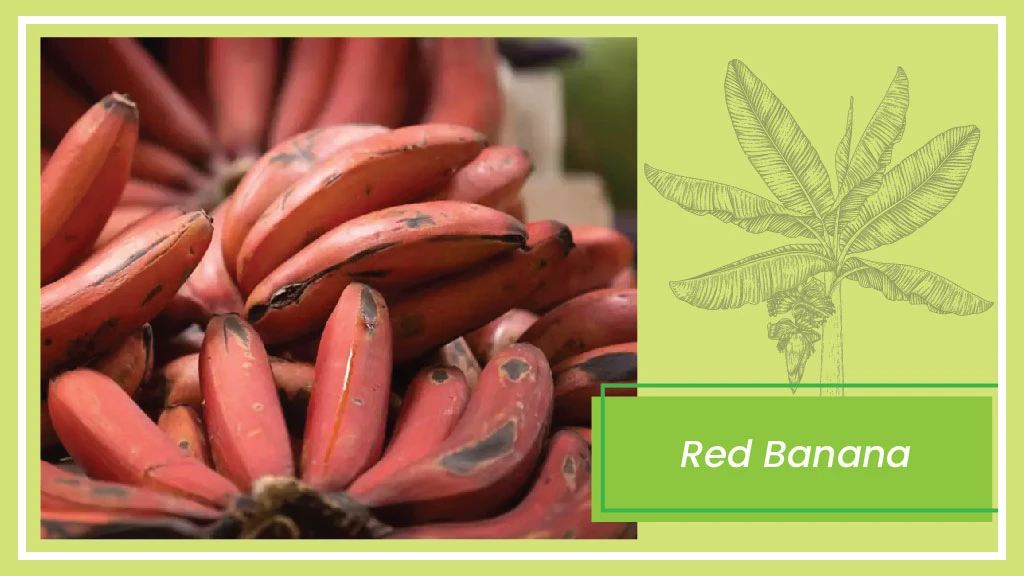
Red bananas are widely popular in states like Kerala and Tamil Nadu. It is a highly priced variety in these states. Its commercial cultivation is prominent in Tirunelveli and Kanyakumari districts of Tamil Nadu, with Kanyakumari district being the largest producer in India. It is popular Lal Velchi in Bihar and other regions and as Chandra Bale in Karnataka.
Some of the key features are:
- Red bananas have reddish-purple skin and sweet, creamy flesh.
- They are smaller than Cavendish bananas and have a delicious & sweet taste.
- It has a creamy texture and a nice aroma.
- Its bunches weigh around 20-30 kg.
- These bananas have fruity undertones like raspberries and mangoes when fully ripened.
Ney Poovan
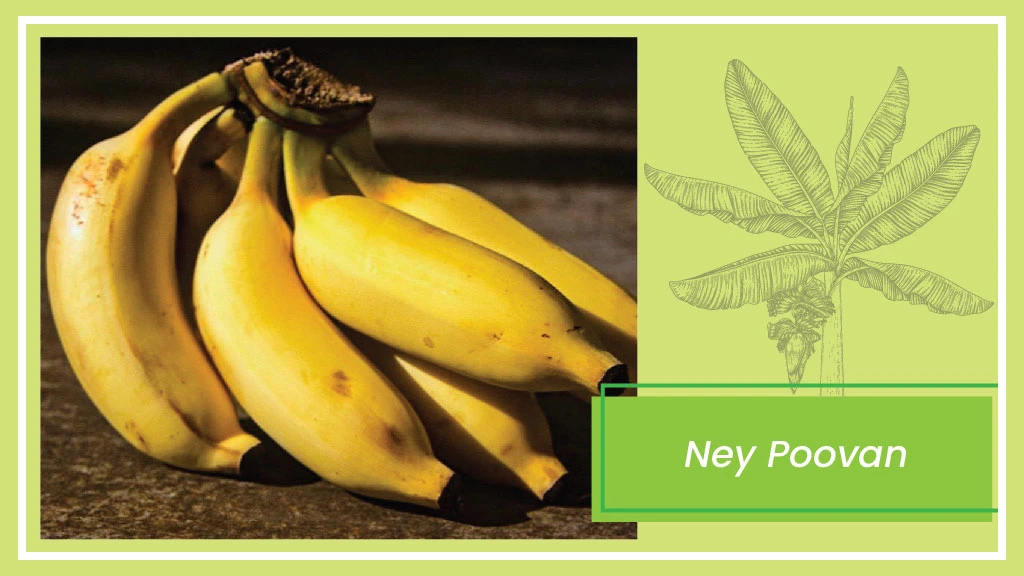
Ney Poovan is the choicest diploid cultivar in the states of Tamil Nadu and Karnataka. This variety is cultivated in backyards in Kerala, where cultivation is now shifting to large-scale production. Also, the Chamarajanagara district in Karnataka is the largest producer of Ney Poovan bananas.
Some of the key features are:
- The average weight of the bunch is 12-14 kg with 10-12 hands.
- These bananas are very sweet; their pulp is firm and has a good aroma.
- These bananas are very thin and are suitable for processing, especially for the ‘Banana Fig’ and ‘juice’ industries.
Virupakashi
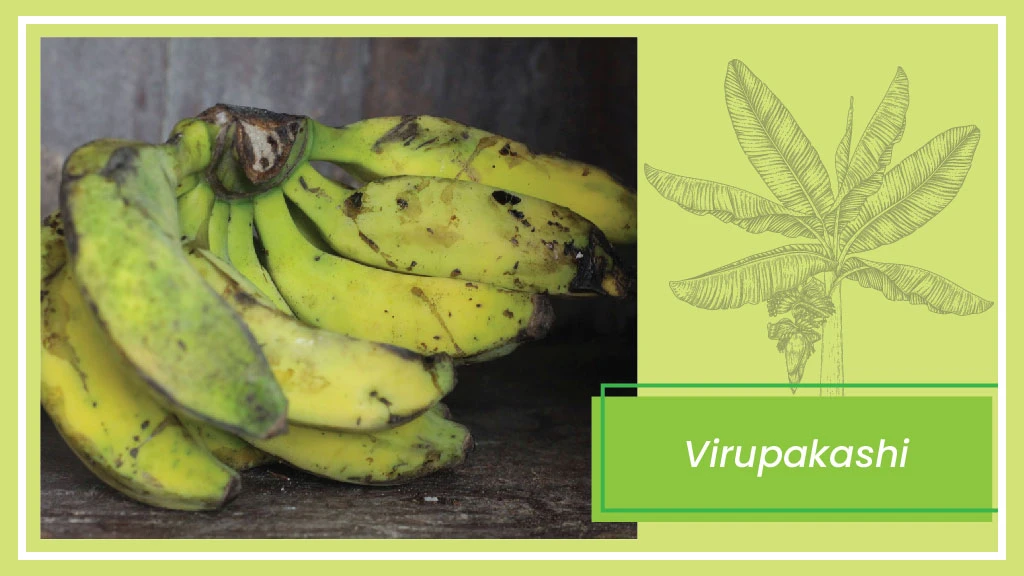
Virupakshi bananas, also known as Malai Vazhaipazham (Malai means mountains and Vazhaipalam means bananas in Tamil) are grown in Palani and Shevroy hills of Tamil Nadu under perennial cultivation. Even though it is not appealing to the eye, it is highly popular in the market due to its distinct taste. Also, the Dindigul district in Tamil Nadu is the largest producer of Virupakashi banana in India.
Some of the key characteristics are:
- They are grown as shade trees for coffee plantations in the hills.
- These bananas are thin and have a nice aroma.
- They are dark green in colour with black spots.
- They have characteristic flavours when cultivated at higher elevations.
Panchanadan
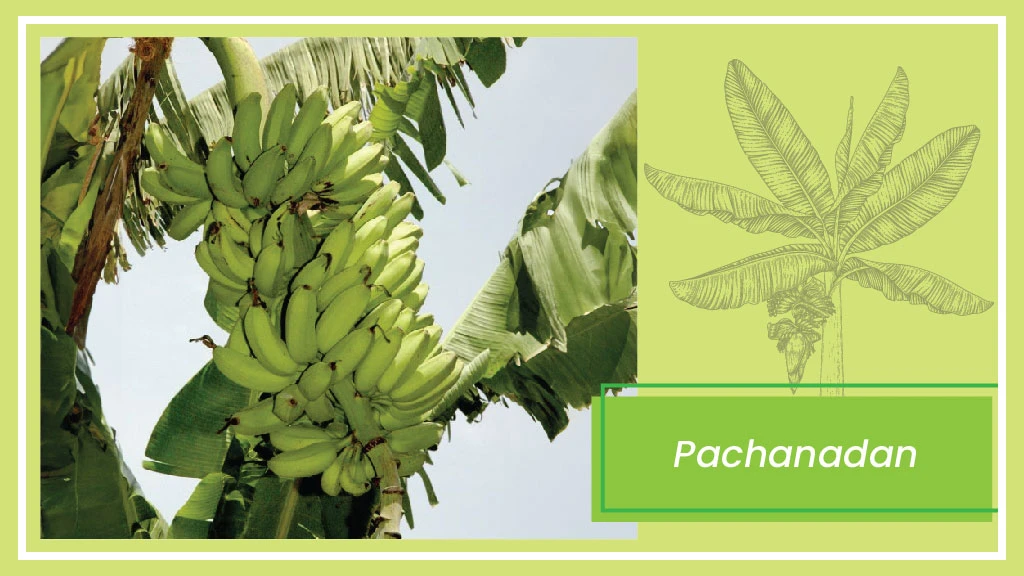
This is a popular variety of Tamil Nadu, with Theni district being the largest producer. This variety is known for its cooling effects. These could be planted in Nendran plantations for gap-filling purposes. Both the ripened and unripe fruits are used for edible purposes.
Some of the characteristic features are:
- It can be cultivated in marginal soils without any yield reduction.
- It is an ideal crop for intercropping with arecanut and coconut.
- These bananas are thick & firm, and the average bunch weight is in the range of 12-15 kg (after 11-12 months).
Monthan
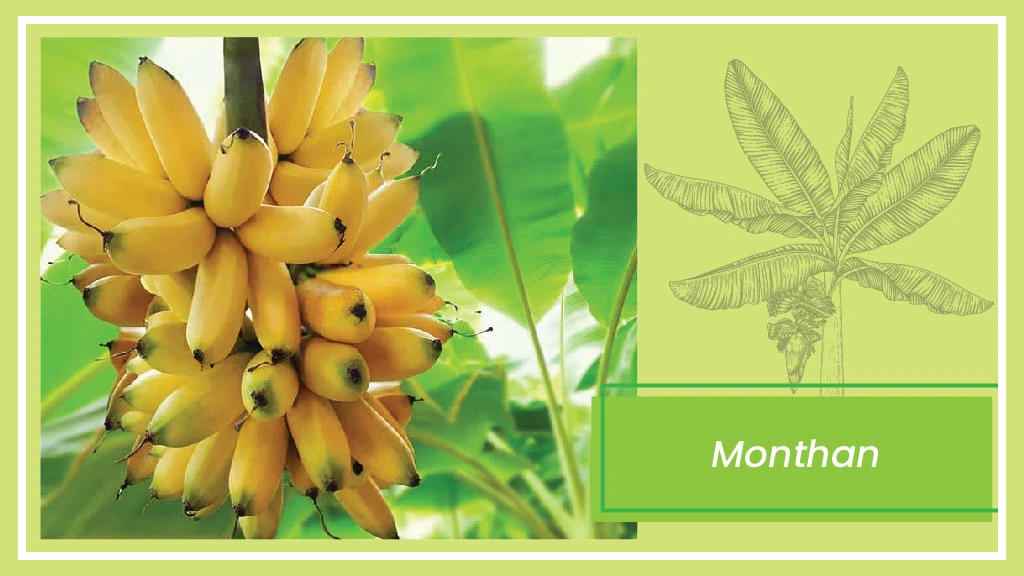
It is a widely cultivated variety throughout the country. It is mainly cultivated for processing. The new prolific 'Monthan' type clones of economic value, namely 'Kanchi Vazhai' and 'Chakkia', have recently become popular in Tamil Nadu. It is also cultivated for leaf production in the Thanjore district of Tamil Nadu. But Tiruchirappalli district in Tamil Nadu is the largest producer of the Monthan banana variety.
Some of the key features are:
- It is tall and robust, bearing bunches of 18-20 kg after 12 months.
- The skin is usually green and has many medicinal qualities as well.
- Fruits are stocky, bold, knobbed, and pale green in colour.
- They are rich in starch, and their flour is used to make cookies and breads.
The raw fruits and male flower buds of Monthan bananas have multiple uses and are suitable for pickle making.
Karpuravalli
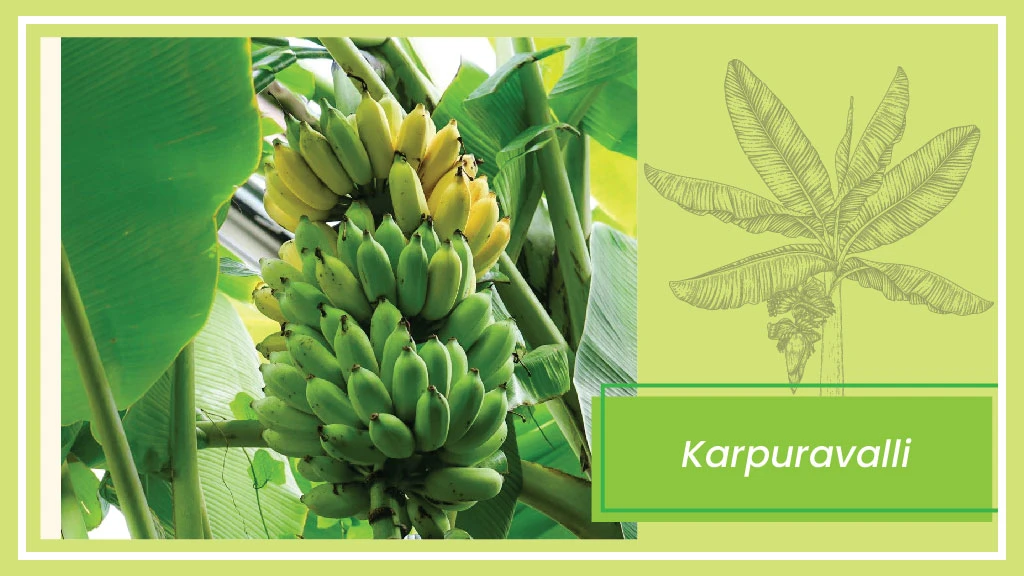
Karpuravalli is a tall, robust plant suitable for marginal lands and soils produced under low-input conditions. It is a popular variety grown in Andhra Pradesh, Bihar, Tamil Nadu and other Northeastern states where weather conditions are too extreme. Among these, Tiruchirappalli district in Tamil Nadu is known as the largest producer of the Karpuravalli banana variety.
The key characteristic features are:
- This variety is considered the sweetest among Indian bananas.
- These bananas are golden in colour, very sweet and delicious, with a bunch weight of 25 kg.
- Its pulp is suited for the preparation of various products like ‘Juice’, ‘Wine’, ‘Sweet Chutney’, ‘Fig’, ‘Banana Fruit Bars’, etc.
Safed Velchi Musa
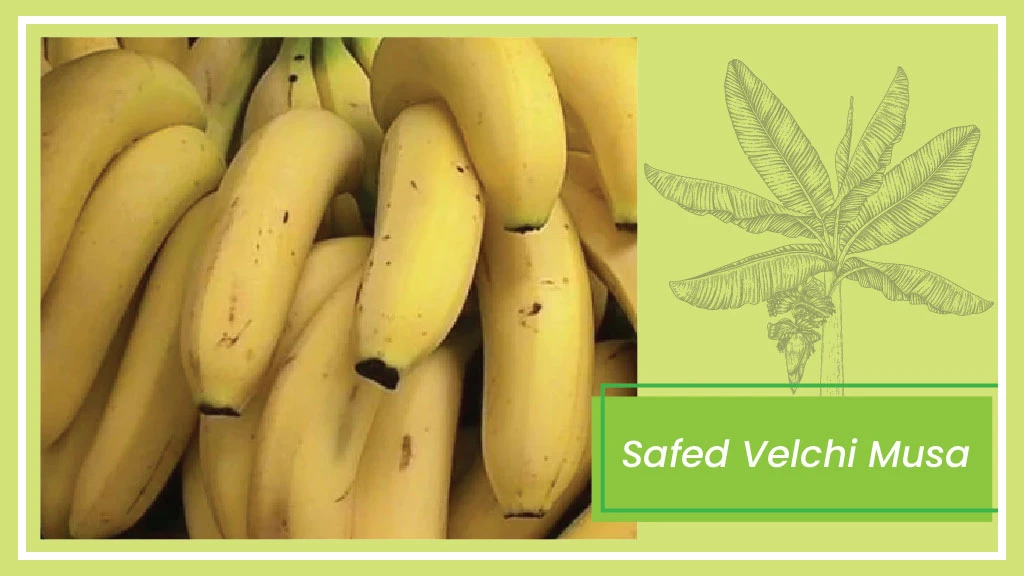
Safed Velchi Musa is a popular banana variety cultivated in districts such as Thane and Nashik in Maharashtra, with Thane district being the largest producer in India. In the South Kanara districts of Karnataka, it is cultivated under the shade of arecanut gardens. This variety is used in many desserts in India.
The key features are:
- It is medium-sized and is yellowish green in colour.
- The average weight of the bunch is about 12 kg.
- It has a reddish petiole margin, large fruits, a very thin & papery rind, and white, firm flesh that is very sweet.
What are Some of the Newly Developed Varieties of Banana?
India has introduced new varieties of bananas in recent years. Let’s have a look at some of the newly developed varieties of bananas below.
- Udhayam- Udhayam belongs to the Pisang Awak group, similar to the Karpuravalli banana. This variety is suitable for cultivation in banana-growing states like Tamil Nadu, Andhra Pradesh, Bihar, and West Bengal. It is comparatively dwarf in stature and is best suited for the processing industry.
- Kaveri Sugantham- This variety is a selection from a somaclonal variant of tissue-cultured Manoranjitham. Its bunch is compact and slightly angular, and the fruits are dark green at maturity and yellowish green at ripening.
- Kaveri Saba- This is a drought and salinity-tolerant variety. It is a medium-statured plant with a height of 3-3.5m, having dark green, shiny leaves, and a bunch that is slightly angular in position. It is starchy and has a flattened, blunt tip. Saba is better suited to marginal cultivation and saline-sodic soils.
- Kaveri Kalki (Namwa Khom) - This variety is a dwarf variety, with a robust, sturdy stature and short leaves, and a green pseudostem with pink streaks. Leaves are almost erect, making them suitable for high-density planting. It reduces cultivation costs because it requires no propping.
- Kaveri Haritha - Kaveri Haritha was released as a Central variety for the states of Andhra Pradesh, Kerala, Tamil Nadu, Odisha, and West Bengal. It has a tightly packed bunch that is huge and cylindrical. The bunch weight ranges from 28 to 30 kg. The fruits are elongated and end with a pointed tip. This variety has better cooking characteristics among the newly developed banana varieties.
- Kaveri Kanya - Kaveri Kanya is released as a Central variety for the states of Tamil Nadu, Kerala, Andhra Pradesh, Karnataka, and West Bengal. This is a medium-tall variety and is robust in nature. The bunch is tightly packed, huge, and has a truncated-cone shape. Bunch weight ranges from 26- 28 kg. Fruits are shorter and thick-skinned, and it is a wind-tolerant variety.
Key Takeaways
From Robusta to Nendran, India grows an amazing variety of bananas. Each type has its own special health benefits. Whether you choose the vitamin-rich Red Banana or the baby-friendly Ney Poovan, both you and your loved ones are sure to get a major health boost.
With newly developed varieties coming to farms, Indian bananas are becoming even more beneficial for our body. So, next time when you think of eating bananas, make sure to try a new variety. Eating different banana varieties helps you get more nutrition and supports the local farmers who grow them.
Frequently Asked Questions On Varieties of Banana
1. Where are bananas grown in India?
Banana is mainly grown in the states of Tamil Nadu, Kerala, Maharashtra, and Andhra Pradesh.
2. How many types of bananas are there in India?
There are 15-20 banana varieties commercially cultivated in India.
3. How to know banana quality in India?
We can assess the quality of bananas by looking at their visual appearance, such as colour, texture, and fragrance.
4. Which Indian banana is the best?
Robusta is the most famous type of banana variety in India.
5. What is Kerala banana called?
The famous Kerala banana is also known as the Nendran banana.
6. What is the most popular banana?
The Cavendish banana is the most popular banana in the world.




Related Blogs