Tractor Batteries in India: Functions, Types, and Maintenance


Tractors are undoubtedly an important part of a farmer’s life. While maintaining your tractor is important, its individual components also require regular attention. This is vital to keep the tractor running smoothly. The battery is one of the key components that starts the tractor’s engine. This blog explains everything you need to know about tractor batteries, including their types and functions. Without further delay, let’s dive into the blog.
Table of Contents
- An Introduction to the Tractor’s Battery
- Functions of Batteries in a Tractor
- Types of Batteries in a Tractor
- Tips to Maintain Your Tractor Battery Health
- When to Replace the Tractor Battery?
- Choosing a New Battery for Your Tractor
- Summary
An Introduction to the Tractor’s Battery
Tractors play a crucial part in agriculture. To ensure that the tractor lasts longer, farmers must take proper care of its components. One of the most important parts of a tractor’s electric system is its battery. Thus, taking good care of it is essential to keep your tractor running smoothly. Let’s now look at some important facts and tips to maintain battery health.
Functions of Batteries in a Tractor
- A tractor battery provides the power needed to start the engine, turn on lights, and use the horn.
- It also helps to control the voltage in the electrical system.
- It stores the electrical energy produced by the alternator and supplies power when the electrical demand exceeds the alternator's output.
Types of Batteries in a Tractor
There are two types of batteries in a tractor: Lead-Acid and Maintenance-Free batteries. Let’s learn about both these batteries in detail.
Lead-Acid Batteries
These are the most used types of batteries in a tractor. It’s because they deliver cost-effective performance and consistent power in the long run. They just need periodic maintenance to keep working properly.
Maintenance-Free (MF) Batteries
Maintenance-free batteries include sealed lead-acid batteries, with AGM batteries being one common type. These are sealed batteries and do not require maintenance, but they are more expensive when compared to lead-acid batteries.
An indicator is provided in a maintenance-free battery to show its working condition. Three color codes are given on the side of the indicator. These are as follows:
- Green: The battery is healthy or fully charged.
- White: The battery needs to be charged.
- Red: The battery is dead.
Tips to Maintain Your Tractor Battery Health
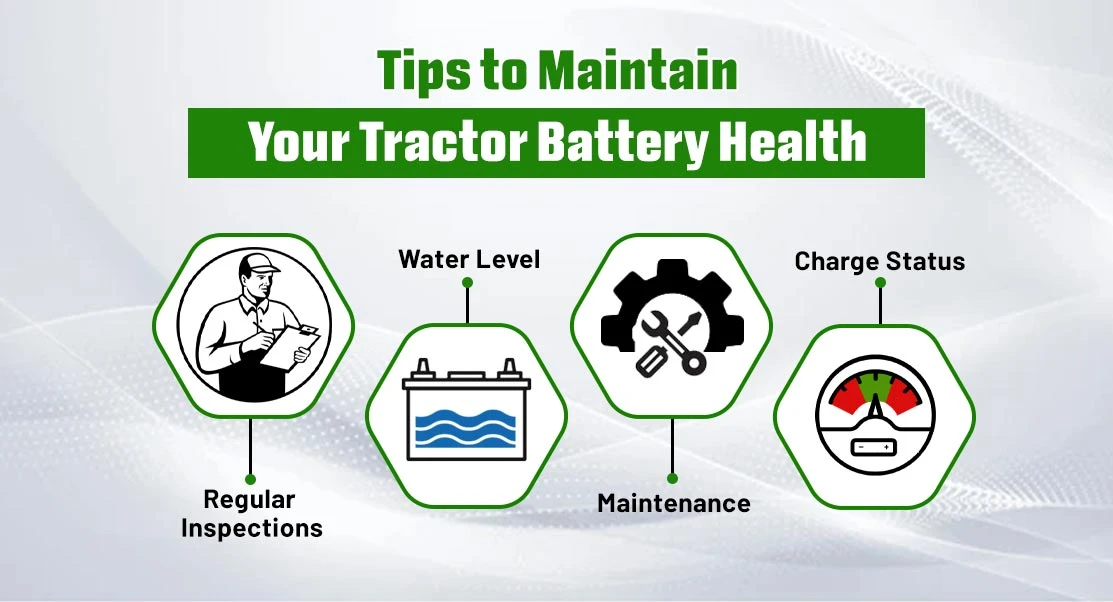
Here’s how you can maintain your battery’s health for optimal performance:
Regular Inspections: Inspect all the terminals and connections of the battery on a regular basis. This helps prevent corrosion and oxidation. If there is rust on the battery, immediately clean the corroded terminals. Coat the battery with petroleum jelly to prevent future corrosion.
Water Level: Checking the water level of your battery is another crucial step, as lead-acid batteries require the correct electrolyte level for smooth performance. If your battery's water level is low, add distilled water immediately. Adding tap water is not recommended as it contains some harmful minerals which can reduce the battery’s life.
Maintenance: Checking the battery’s surface to see if it is clean or not is essential. Keep your battery free from dust, dirt, and moisture. During cleaning, wear protective gloves, as lead-acid batteries can be hazardous. Several tractors now come with a battery cut-off switch, so if your tractor has one, use it during the rainy season to protect the tractor's battery.
Charge Status: Charging status is another important step. Monitor the charge status of your tractor’s battery. Inadequate charging can reduce the battery’s life.
When to Replace the Tractor Battery?
- If you find any difficulty starting the tractor’s engine, change the battery.
- Change the battery quickly if any type of swelling or deformation occurs on the battery.
- If the battery cannot supply sufficient power or indicate low voltage, it may need to be replaced. Check the voltage level through a voltmeter on the instrument cluster.
- If your battery is not charging quickly or frequently discharges, you may need to replace the battery now.
- If your engine starts slowly, takes longer to turn on, or just makes a clicking sound when you turn the key, it’s time to replace your battery.
Choosing a New Battery for Your Tractor
- Ensure that the battery you are purchasing matches the tractor’s model and requirements.
- Make sure to buy a battery that is compatible with your tractor, including the capacity, voltage, and size of the battery.
- Moreover, select a high-quality and reliable brand that will provide better performance and longer service life.
Summary
As we conclude this blog, let’s sum up the important points. Now that you know how to take care of your tractor battery, make sure to regularly do these simple checks. It’s because doing this will keep the battery running strong, help it last longer, and save you money on replacements. Concluding the blog, we would like you to check out Tractorkarvan for more informative tractor-related blogs.
Frequently Asked Questions On Tractor Batteries in India
1. What are the functions of a tractor battery?
A tractor battery is crucial to start the engine, power electrical accessories, and regulate voltage for the electrical system.
2. What are the two main types of tractor batteries?
Lead-Acid batteries and Maintenance-Free (MF) batteries are the two major types of batteries used in tractors.
3. How do I know if my tractor battery needs replacement?
If your battery struggles to start the engine, requires constant jump-starts, and shows visible physical damage like swelling or leaking, then you must change your tractor’s battery.
4. How can I improve my tractor battery health?
You can maintain your battery’s health by regularly cleaning its terminals, maintaining proper fluid levels, and keeping the battery fully charged by frequently running your tractor.
5. How to choose a new battery for my tractor?
Make sure the battery you are purchasing matches the tractor’s model and requirements, including its capacity, voltage, and size.






Related Blogs