Disc Harrow vs Disc Plough: Difference, Uses and Price


Ploughs are key implements necessary for effective soil and seedbed preparation. Disc plough and disc harrow are two main tillage implements used by Indian farmers. Both implements have distinct uses and benefits. Go through the blog to understand the main uses and differences between disc harrow and disc plough.
Table of Contents
- What is Disc Plough?
- What is Disc Harrow?
- Uses of a Disc Plough & Disc Harrow
- Differences Between a Disc Harrow and Disc Plough
- Disc Harrow vs Disc Plough: Comparison
- Disc Harrow vs Disc Plough: Best Pick
What is Disc Plough?
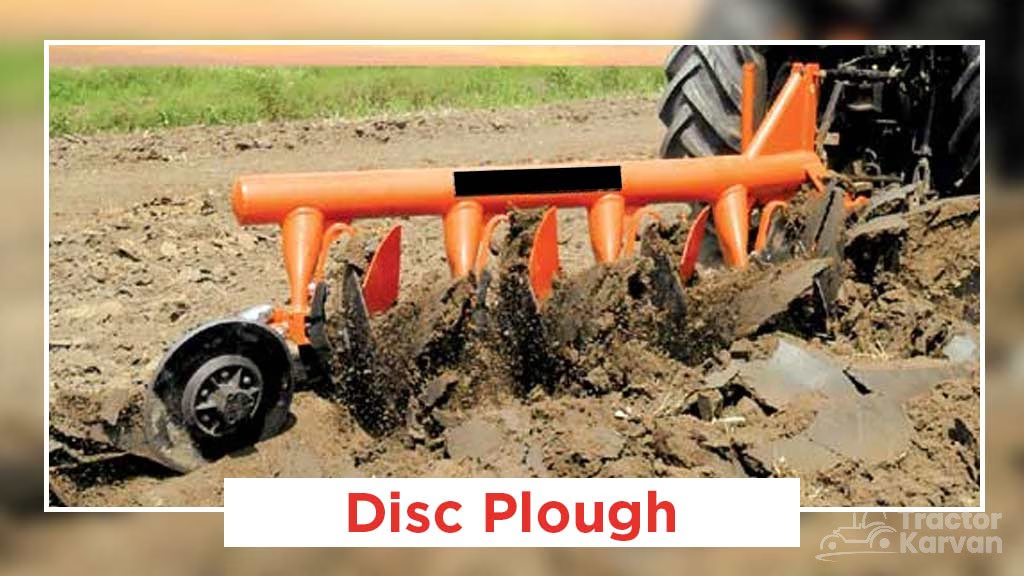
A disc plough is a primary tillage implement mainly used to break the hard soil layer with its large concave steel discs. This is usually the primary field operation following harvest to cut deep into the soil and invert it to bury and mix crop residue, weeds, and organic matter. With its rotating discs, a disc plough is effective in uncultivated land and hard soil conditions, including rocky, rooty, dry, heavy clay, and compacted soil. Explore top disc plough brands in India to find a suitable plough for your tillage needs.
What is Disc Harrow?
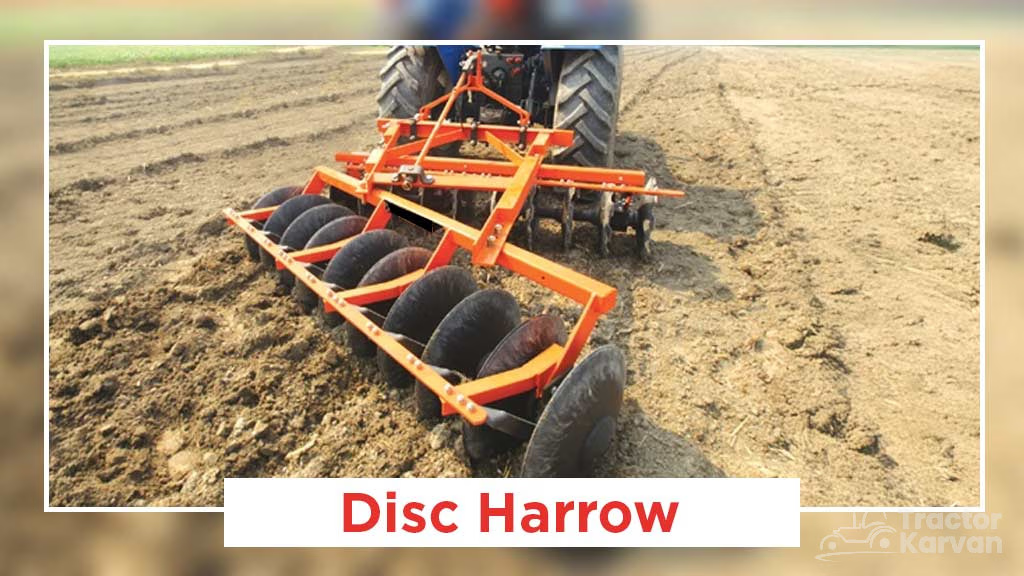
A disc harrow is mostly used after the initial ploughing phase to refine the soil and level the field. This secondary tillage implement works to prepare an ideal seedbed with rows of rotating concave, sharp discs. By breaking large soil clods, it helps improve soil texture and aeration. A disc harrow uproots weeds and incorporates leftover crop residue into the soil.
Uses of a Disc Plough & Disc Harrow
The main applications of a disc plough are:
- To break compacted and hard soil effectively
- To prepare the soil for cultivation
- To bury crop residue, organic matter, and weeds
Below are the primary uses of a disc harrow:
- To refine and smoothen the already ploughed land
- To create an ideal seedbed by leveling the field
- To control weeds, incorporate crop residue, and mix fertilizer into the soil
Differences Between a Disc Harrow and Disc Plough
Is a disc plough the same as a disc harrow? If you are wondering the same, here is a detailed comparison of both tillage implements:
Purpose
The primary purpose of a disc plough is primary tillage, involving breaking and turning hard soil. As it is among the first steps to prepare the field for cultivation, a disc plough generally encounters significantly dry, hard, and heavy soil.
On the other hand, a disc harrow is employed for secondary tillage, following the initial ploughing, to level the field and form a fine seedbed. Its main role is to prepare the soil for planting by breaking large clods into much finer particles.
Working Mechanism
With large rotating disc blades, a disc plough cuts through the soil while turning it upside down. The individual mounted discs slice into the ground at an angle as the tractor moves forward, while lifting and turning the soil. The disc uses a scooping action to turn the furrow slice to one side.
A disc harrow has multiple concave steel discs arranged in multiple gangs, which rotate on the ground as the tractor pulls the implement. Based on the gang angle, it penetrates soil to shatter lumps and clods and form a fine seedbed.
Working Depth
As a disc plough is mainly designed for primary tillage to prepare an uncultivated land for cultivation, it works at a greater depth, which is usually up to 30 cm. Comparatively, a disc harrow operates at a shallower level to smoothen and pulverize the soil. This is mainly because this implement is used after initial ploughing. In addition, a disc plough typically weighs more than a harrow, which allows it to go deep into the soil.
Discs
A disc plough has a lower number of discs, which usually range from 2 to 5. In comparison, a disc harrow has a much higher number of discs. For instance, Fieldking disc harrow offer up to 36 discs based on harrow type and specific model.
A disc plough has larger discs to cut deeper into the soil. Usually, the disc size is 60 cm in diameter to turn a 35 – 30 cm furrow slice. The concave discs of a disc harrow could be 45 to 55 cm in diameter. They are ideal for shallow tilling and seedbed preparation.
Suitability
A disc plough is suitable for uncultivated and fallow land. It can easily handle challenging soil conditions, ranging from rocky to clay soil. A disc harrow mostly works on already ploughed soil as it is a secondary tillage implement. It is highly preferred for pre-ploughed, clay, loamy, and sandy soils.
Price
A disc harrow is generally observed to be more expensive than a disc plough. It is mainly because of the higher number of discs and wider width for more coverage. However, the specific price depends on multiple factors, including chosen brand, model, and number of discs.
Disc Harrow vs Disc Plough: Comparison
|
Disc Harrow |
Disc Plough |
|
Ideal for secondary tillage |
Suited for primary tillage |
|
Creates an ideal seedbed |
Prepares land for cultivation |
|
Lower working depth |
Higher working depth |
|
Best for hard, stony, rooty soil |
Best for already ploughed soil |
|
More number of discs but smaller in size |
Less number of discs but larger in size |
Disc Harrow vs Disc Plough: Best Pick
Choosing between a disc harrow and disc plough mainly depends on your tillage needs and soil conditions. Both implements have a specific use in farming. A disc plough is a better choice if you:
- Have to cultivate hard, uncultivated land.
- Need to bury leftover residue and weeds.
- Want deep soil penetration for initial land preparation.
Choose a disc harrow if you:
- Have land that has already been ploughed.
- Want to prepare the land for planting.
- Want to create a smooth seedbed by breaking large soil clods
There is another approach where farmers use disc plough and disc harrow in sequence. First, a plough to cultivate the hard ground and then a harrow to refine the soil and create a suitable seedbed. Explore a wide range of ploughs listed on Tractorkarvan and get details about implement loans to make a wise purchasing decision.
Frequently Asked Questions On Disc Harrow vs Disc Plough
1. What is the use of a disc plough?
A disc plough is designed for primary tillage to cut soil deeply and bury weeds and crop residues.
2. What is the use of a disc harrow?
A disc harrow is suited for secondary tillage, which pulverizes soil to level the field and create a fine seedbed.
3. Which has a higher working depth: a disc plough or a disc harrow?
A disc plough generally has a higher working depth than a disc harrow.
4. Which has more number of discs: a disc plough or a disc harrow?
A disc harrow is known to have a higher number of discs.
5. Is a disc plough enough for seedbed preparation?
Generally, a disc plough can leave large soil clods, resulting in an uneven field. Another implement like a disc harrow may be needed to create a finer seedbed.



Related Blogs